

Introduction:
Professor Olutayo Charles Adesina, a distinguished figure in the field of history, stands as a beacon of intellectual excellence, seamlessly blending the roles of scholar, administrator, mentor, pedagogue, and public intellectual. His educational background, scholarly contributions, and administrative leadership have left an indelible mark on the academic landscape. Currently serving as a Professor of History at the University of Ibadan, Nigeria, he has played pivotal roles in shaping the academic environment, both locally and globally.
Educational Background:
Prof. Adesina’s academic journey is marked by excellence and a commitment to intellectual pursuits. He obtained his PhD from the Department of History at Obafemi Awolowo University, Ile-Ife, Nigeria. This foundational academic achievement laid the groundwork for a career dedicated to the exploration and understanding of sub-Saharan African history, with a particular focus on Nigerian history and the Economic History of West Africa.
Contribution to Academics and Scholarship:
Professor Adesina has, over more than three decades, been at the forefront of scholarly endeavors, summoning intersections of local, national, regional, and global history. His prolific output includes authoring and co-authoring more than a dozen books and over sixty articles, making significant contributions to the field of African history.
His publications span a wide range of topics, from globalization and transnational migrations to issues of identity and crisis in contemporary Africa. His publication titled: “Globalization and Transnational Migrations” (2009) and “Marginality and Crisis” (2010), co-edited with Akanmu Adebayo and Rasheed Olaniyi, explore the intricate dynamics of globalization and its impact on African identity. Additionally, his collaborative work on “Critical Perspectives on Peace, Conflict and Warfare in Africa” (2012) provides critical insights into the historical roots and contemporary challenges of peace and conflict on the continent.
 Adesina’s scholarly contributions extend to addressing contemporary issues in Nigeria, evident in his work “Nigeria in the Twentieth Century: History, Governance and Society” (2017). This publication offers a comprehensive examination of Nigeria’s historical trajectory, governance structures, and societal evolution throughout the twentieth century. His interdisciplinary exploration of sports and spirituality in “Global Perspectives on Sports and Christianity” (2018) adds a unique perspective to the intersection of sports, religion, and memory. Furthermore, his chapter on “Feeding the Millions” in “Contemporary Issues in Africa’s Development” (2018) critically examines the complexities of food security in Africa, demonstrating Adesina’s commitment to providing historical depth to contemporary challenges.
Professor Adesina is a proficient biographer that can be akin to a literary archaeologist, skillfully excavating the layers of a subject’s life with meticulous research, empathetic understanding, and the narrative finesse of a seasoned storyteller. In June 2020, he contributed a thought-provoking piece, “A Terrain…Angels Would Fear to Tread”: Biographies and History in Nigeria,” published in the Southern Journal of Contemporary History. As an This work explores the intersection of biographies and history, showcasing his ongoing dedication to nuanced historical analysis. As he embarks on completing a book-length manuscript on ‘The Indian Diaspora in Nigerian History, Economy and Political Power Relations,’ Professor Adesina’s commitment to scholarly excellence continues to shape the trajectory of African historical scholarship, providing fresh insights and enriching the understanding of the complexities inherent in the continent’s past and present.
His commitment to academia is further demonstrated by his editorial roles, such as serving as the editor of The Nigerian Journal of Economic History and guest editing the Journal of Global Initiatives.
Administrative Leadership:
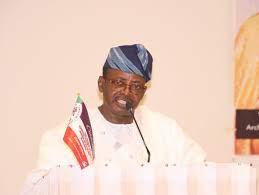 Professor Adesina has showcased his administrative acumen through various leadership positions. He served as the Sub-Dean (General), Faculty of Arts (2001-2003), twice the Head of the Department of History (2006-2008, 2019-2022), and the Director of General Studies Programme (2014-2018) at the University of Ibadan, providing effective leadership during his tenures. His administrative contributions have played a crucial role in shaping the academic landscape and fostering an environment conducive to intellectual growth.
Global Recognition and Fellowships:
Prof. Adesina’s scholarly excellence has garnered global recognition, earning him fellowships from prestigious institutions. Notable among these are the Fellow of the Atlantic History at Harvard University, the African Visiting Fellow at Rhodes Chair of Race Relations, Oxford University, and a fellowship at the Institute of Advanced Studies, Jawaharlal Nehru University, India. These accolades not only reflect his academic prowess but also affirm the international impact of his work.
Contribution to Building Capacities:
Professor Adesina’s teaching prowess is particularly noteworthy in his role as a mentor. Having mentored hundreds of students and produced numerous Ph.D. graduates, he has built a vast network of mentees who have thrived under his guidance. His mentorship extends beyond academic realms, touching upon personal and professional development, contributing significantly to the success of his students.
The impact of Professor Adesina’s mentorship is evident in the success of his students in various fields. Many have gone on to excel in diverse endeavors, a testament to the comprehensive education and guidance they received under his tutelage. His ocean of wealth shared, both in knowledge and mentorship, continues to nourish the successful exploits of those he has influenced.
Public Engagement:
 Professor Adesina’s engagement goes beyond academia, as evidenced by his role as the president of the Society of Nigerian Archivists (SNA). His leadership in this capacity reflects a commitment to the preservation and promotion of historical archives, contributing to the broader cultural heritage of Nigeria.
He has also played a pivotal role in societal development through his collaboration with the Development Agenda for Western Nigeria. His involvement as a friend of the commission, delivering the 11th edition of the Yoruba Historical Conversation lecture in 2019, showcases his dedication to promoting historical understanding within the broader community.
Professor Adesina’s influence extends to matters of regional security, as he was instrumental in suggesting the name “Amotekun” as the codename for the current regional security outfit corps in the Southwest. This contribution underscores his commitment to addressing contemporary challenges facing the region.
Conclusion:
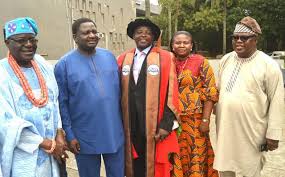 Professor Olutayo Charles Adesina stands as a beacon of academic excellence and administrative leadership in the field of history. His journey from a PhD scholar to a globally recognized Professor is a testament to his unwavering commitment to advancing knowledge and fostering intellectual growth. Through his extensive publications, leadership roles, and global engagements, Prof. Adesina has significantly contributed to the enrichment of Nigerian history and the broader field of African studies, leaving an enduring legacy for generations to come.His legacy is one of holistic and transformative contributions to education and societal development through his collaboration with the Development Agenda for Western Nigeria, and his instrumental role in suggesting the name “Amotekun” for the regional security outfit highlight his dedication to addressing contemporary challenges. As a scholar, administrator, mentor, and public intellectual, Prof. Adesina’s influence extends beyond the classroom, leaving an enduring mark on the academic and societal landscape of Nigeria.