

Professor Isaac Folorunso Adewole stands as a symbol of excellence in both academia and public service, with a distinguished career spanning decades. Born on May 5, 1954, in Ilesa, Nigeria, Adewole’s journey towards becoming a prominent figure in medicine and governance reflects his unwavering commitment to service, his exceptional academic prowess, and his significant contributions to healthcare in Nigeria and beyond.
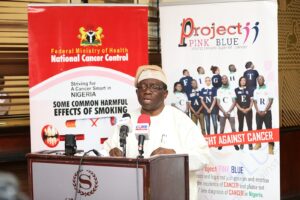 Adewole’s academic journey started at the prestigious University of Ibadan, where he obtained his MBBS degree in 1978. His early academic achievement, including winning the Glaxo Allenbury Prize for outstanding performance in pediatrics, foreshadowed a career marked by scholarly excellence. His research specialization is in the field of obstetrics and gynecology, focusing on critical areas such as human papillomavirus (HPV), HIV, and gynecologic oncology.
 Throughout his career, Adewole’s research efforts have been instrumental in advancing the understanding and treatment of cancers affecting the female reproductive system. His prolific output includes over 180 scholarly articles and numerous books, reflecting his commitment to advancing medical knowledge and addressing pressing healthcare challenges. His contributions extend beyond academia, as he actively engages in health advocacy and policy formulation to combat prevalent issues such as unwanted pregnancies and cervical cancer.
Adewole’s administrative skills became evident early in his career, as he ascended through the ranks at the University of Ibadan. From serving as a lecturer to assuming leadership roles as Dean of the Faculty of Clinical Sciences and Dentistry and later as Provost of the College of Medicine, Adewole demonstrated his ability to drive positive change and foster academic excellence.
His tenure as Vice-Chancellor of the University of Ibadan marked a transformative period for the institution, characterized by significant improvements in staff and student welfare, academic standards, and institutional reputation. Under his leadership, the University of Ibadan became a shining example of academic excellence, solidifying its position as one of Nigeria’s premier educational institutions., solidifying its place among Nigeria’s top universities.
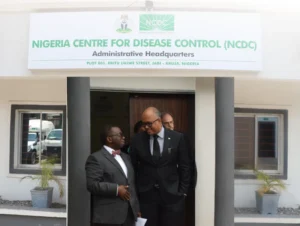 Adewole’s commitment to public service culminated in his appointment as Minister for Health of Nigeria in November 2015. Tasked with overseeing the nation’s healthcare sector, he embarked on a mission to revitalize Nigeria’s healthcare system and improve health outcomes for its citizens.
During his tenure, Adewole prioritized collaboration and innovation, recognizing that addressing Nigeria’s healthcare challenges required concerted efforts from all stakeholders. He spearheaded initiatives to enhance primary healthcare delivery, strengthen disease surveillance and response mechanisms, and promote preventive healthcare strategies.
 He served as the Chairman of the Technical Committee, alongside fifteen professionals in health sector, set up by DAWN Commission in August 2020. His professional and administrative input guided the committee to produce the “Regional Health Blueprint” document for the Southwest.
Adewole’s leadership was characterized by a commitment to evidence-based policymaking and a steadfast dedication to improving the health and well-being of Nigerians. His efforts to combat epidemics such as the Ebola virus outbreak and his advocacy for universal health coverage underscored his unwavering commitment to public health.
 Adewole’s contributions to medicine, academia, and public service have been widely recognized through numerous honors and awards. He is a Fellow of the Nigerian Academy of Science, the National Postgraduate Medical College of Nigeria, and the West African College of Surgeons, attesting to his stature as a distinguished scholar and healthcare practitioner.
Additionally, Adewole’s membership in prestigious academic organizations such as the Association of Commonwealth Universities and his appointment to international advisory boards further highlight his global impact and recognition within the academic community.
In conclusion, Professor Isaac Adewole’s remarkable path reflects the intersection of academic excellence, administrative leadership, and public service. From his pioneering research in gynecologic oncology to his transformative leadership as Vice-Chancellor and Minister for Health, Adewole has left an indelible mark on Nigeria’s healthcare landscape. His legacy serves as an inspiration to aspiring scholars and healthcare professionals, embodying the principles of dedication, innovation, and service to humanity.