

Dele Olojede’s life story is a remarkable testament to his dedication to journalism, truth, and social change on both national and international stages. Born in 1961 in Modakeke, Osun state, Nigeria, he emerged from a family of 28 children, setting the stage for a life filled with exceptional achievements and groundbreaking journalism. His journey began in 1982 when he joined the National Concord, a Nigerian newspaper owned by Moshood Abiola, but his unwavering commitment to journalistic integrity led him to part ways in 1984.
Olojede’s educational path took him to the University of Lagos, where he studied journalism and engaged in the student union movement. Inspired by literary giants such as Chinua Achebe, Wole Soyinka, and Ngũgĩ wa Thiong’o, he also explored acting and poetry. In 1984, Olojede became a founding staff writer at Newswatch, a Nigerian news magazine.
 His journey took a tragic turn in 1986 when the magazine’s editor, Dele Giwa, was killed by a mail bomb. Undeterred, Olojede accused Nigeria’s military leader, Ibrahim Babangida, of involvement in the murder. In the same year the turning point in Olojede’s career came when his investigative report on the imprisonment of Nigerian musician Fela Anikulapo Kuti led to Fela’s release and the dismissal of the judge responsible. His courageous stand for justice among other journalistic activism led to a Ford Foundation Scholars grant in 1987, enabling him to pursue a master’s degree at Columbia University, where he received the Henry N. Taylor Award for an outstanding foreign student.
The late 1980s marked Olojede’s association with Newsday, a Long Island-based newspaper, where he began as a summer intern in 1988. He quickly advanced, ultimately becoming a United Nations Correspondent, reporting on international events, and later an Africa Correspondent based in Johannesburg, South Africa.
In 1996, Olojede embarked on a significant shift, working as a correspondent in China until 1999, where he served as Asia Bureau Chief in Beijing, covering a diverse range of Asian stories. However, his passion for Africa led him back to Long Island, where he took on the role of foreign editor at Newsday.
The decision to cover the Rwandan genocide in 2004 was a profound one. Despite covering the historic South African general elections in 1994, Olojede often wondered if he could have made a difference in Rwanda. His series on the aftermath of the Rwandan genocide, especially the story “Genocide’s Child,” garnered significant attention and provided fresh insights into the enduring impacts of the tragedy.
 The pinnacle of Olojede’s career came in 2005 when he was awarded the Pulitzer Prize for International Reporting, marking a milestone for all black journalists. He collaborated with photographer J. Conrad Williams and editor Lonnie Isabel. Subsequently, he left Newsday in 2004, relocating to Johannesburg, South Africa, where he learned of his Pulitzer Prize win.
Returning to Nigeria in 2008, he initiated 234Next, a groundbreaking venture that began on Twitter, expanding online and in print. Despite facing government resistance, the publication exposed critical issues, including the secret brain death of President Yar’Adua.
In 2011, Olojede’s visionary efforts in founding NEXT earned him the John P. McNulty Prize for innovative projects driving social change, promoting ethical journalism, and paying journalists fairly. Although NEXT faced financial challenges and ultimately collapsed in 2011, Olojede’s legacy continued to shine.
Olojede’s accolades extended beyond the Pulitzer Prize, including the Unity Award from Lincoln University and the Media Award from the Press Club of Long Island in 1992, the Publisher’s Award from Newsday and the Educational Press of America Distinguished Achievement Award in 1995, the Prize for Ethical Leadership from the World Forum for Ethics in Business in 2010, and being named one of Fast Company’s “100 Most Creative People” in the same year.
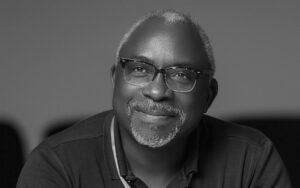 Beyond his journalism career, Olojede served on the boards of EARTH University, The Markup, and as a patron of the Etisalat Prize for Literature. He moderated leadership seminars for the Aspen Global Leadership Network and was a fellow of the Africa Leadership Initiative South Africa.
As the chairman of the board of the Kashim Ibrahim Fellowship, Olojede continued to nurture emerging young leaders in Nigeria. His commitment to making a positive impact extended to building a platform for long-form writing about the African world.
In summary, Dele Olojede’s journey in journalism and social impact has been truly extraordinary. His dedication to truth and accountability, along with his remarkable career, inspire future generations of journalists and leaders. Olojede’s legacy continues to illuminate the path for those who follow in his footsteps, highlighting the power of journalism in driving meaningful change and transformation in society. His journalistic endeavour deservers an accolade as an Akinkanju of national and international journalism
Reference
https://kif.kdsg.gov.ng/kif_team_member/dele-olojede/
https://www.pulitzer.org/winners/dele-olojede
https://en.wikipedia.org/wiki/Dele_Olojede