
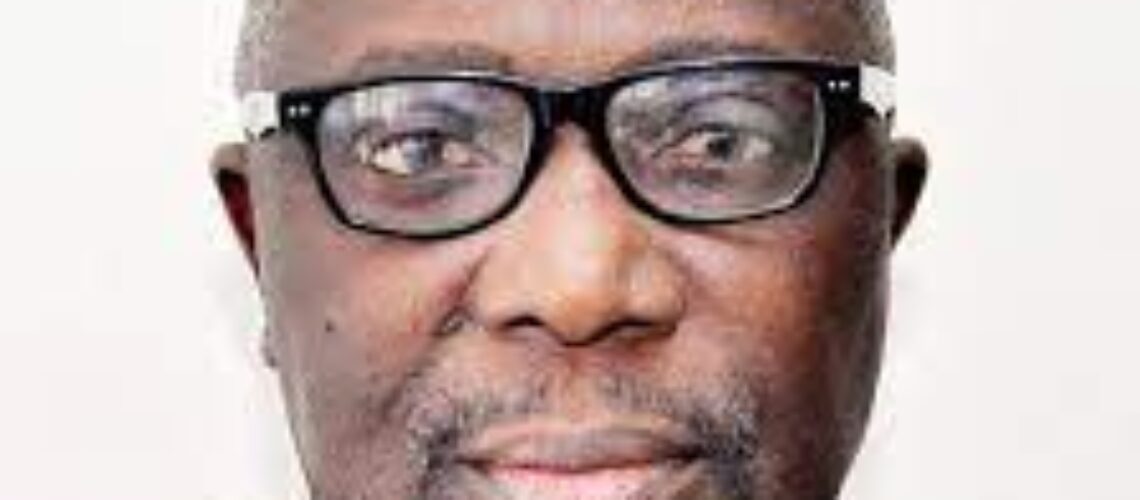
Dapo Olorunyomi, whose full name is Oyedapo Oyekunle Olorunyomi, was born on November 8, 1957. He was born to Samuel Akinbayo Olorunyomi, a retired Army officer and civil servant, and Mary Olorunyomi. Dapo is the third of six siblings, one of whom is Sola Olorunyomi, renowned for authoring “Afrobeat: Fela and the Imagined Continent,” an acclaimed work on the Afrobeat pioneer, Fela Kuti.
Educational Journey:
Dapo’s educational journey took him through several institutions. He began his academic pursuit at St. Bartholomew’s Primary School in Wusasa, Zaria. Subsequently, he attended Esie-Iludun Anglican Grammar School in Esie-Iludun before moving on to the Government Secondary School in Ilorin. Dapo’s passion for literature led him to obtain a Bachelor of Arts degree in English Studies in 1981 and a Master of Arts degree in Literature in 1985, both from Obafemi Awolowo University in Ile-Ife. He furthered his knowledge with a Certificate in Natural Resource Management from the Blavatnik School of Government at the University of Oxford in 2017 and a Certificate in Human Rights and Humanitarian Law from American University’s Washington College of Law in 2006.
A Trailblazer in Journalism:
 In 1991, Dapo Olorunyomi made his mark as the founding editor of the now-defunct Nigeria Journalism Quarterly (NJQ). Two years later, in 1993, he co-founded and assumed the role of deputy editor-in-chief at The NEWS magazine. Simultaneously, he played a pivotal role in launching Tempo magazine, which gained notoriety for its bold reporting. Tempo’s office, concealed near the police headquarters, rattled the regime, leading to the arrest of anyone caught reading it. Dapo Olorunyomi’s fearless reporting drew the ire of the Abacha regime, resulting in his arrest on two occasions. In 1995, he was forced into hiding due to threats on his life by the regime.
The Battle for Press Freedom:
During General Sani Abacha’s military rule in June 1995, four journalists, including Dapo Olorunyomi, were targeted for their reporting on an alleged plot against the Abacha government. They were secretly tried, charged as “accessories after the fact of treason,” and sentenced to life imprisonment. Dapo was declared a fugitive by the Abacha administration, and his wife, Ladi Olorunyomi, also a journalist and women’s rights activist, endured 68 days of unjust detention without charges. Dapo Olorunyomi sought refuge in the United States, where he spoke out against Abacha’s media crackdown, with international organizations like the Committee to Protect Journalists (CPJ) playing a pivotal role in his escape. The four jailed journalists were eventually released, and Dapo returned to Nigeria
Championing Press Freedom and Investigative Journalism:
 Upon his return to Nigeria in 2004, Dapo Olorunyomi served as the Project Director of Freedom House before becoming the policy director and chief of staff to the executive chairman of the Economic and Financial Crimes Commission. He led initiatives on corruption prevention and education policy development. Dapo also held positions on the boards of various organizations, including the Norbert Zongo Cell for Investigative Journalism and CENOZO, a transnational investigative body for West Africa based in Burkina Faso. In 2005, Dapo founded the Wole Soyinka Centre for Investigative Journalism in Lagos, dedicated to exposing corruption and human rights abuses. In 2007, he joined the defunct NEXT Newspapers, founded by the Pulitzer Prize winner, Dele Olojede. At NEXT, Dapsy, as he is fondly called, joined others to raise the bar of investigative journalism in Nigeria. Four years later, in 2011, he established Premium Times, a multimedia news platform in Nigeria focused on politics, health, investigative reporting, and development journalism.
The Legacy Continues:
Today, Dapo Olorunyomi is the co-founder, CEO, and publisher of Premium Times, one of Nigeria’s most trusted newspapers, setting the standard for African investigative journalism. His unwavering dedication to holding those in power accountable has earned him the title of the “godfather” of investigative journalism in Nigeria. Throughout his career, Dapo has faced official harassment, including a 2017 police raid on Premium Times’ offices, which led to his arrest and that of a reporter. These arrests were made on allegations of defaming the chief of army staff, but both journalists were eventually released as the army distanced itself from the actions of their chief.
An Award-Winning Journalist
 Dapo Olorunyomi’s contributions to journalism have not only been impactful but also recognized on national, regional, and global stages. His editorial work during Nigeria’s years of military dictatorship garnered him several prestigious awards, including the 1995 International Editor of the Year Award from the World Press Review, the 1996 PEN Center (West) Freedom to Write Award, and the 1996 Press Freedom Award from the National Association of Black Journalists (NABJ) in New York.
In addition to these accolades, Olorunyomi’s journalistic endeavors extended to international recognition, with a joint Pulitzer Award in 2016 for his involvement in reporting on the Panama Papers and the 2017 Global Shining Light Award from the Global Investigative Journalism Network. In that same year, he received the Press Freedom award from the Nigeria Union of Journalists and a fellowship award from the Nigeria Institute of Journalists. The Diamond Awards for Media Excellence also honored him with a Lifetime Award.
In 2020, the Committee to Protect Journalists (CPJ) presented its International Press Freedom Award to Dapo Olorunyomi, acknowledging his unwavering commitment to journalistic integrity and freedom of the press. To top it all off, this year, he was named the first African Fellow of the Poynter Institute’s Media Transformation Challenge Fellowship, solidifying his status as a trailblazer in journalism with a global impact.
Conclusion
Dapo Olorunyomi’s commitment to journalism and press freedom remains unwavering, continuing to inspire journalists and advocates worldwide. His life’s journey serves as a testament to the enduring spirit of truth, accountability, and journalistic integrity in the face of adversity that makes him worthy of being called an AKINKANJU in journalism.
Reference
https://cpj.org/awards/dapo-olorunyomi-nigeria/