
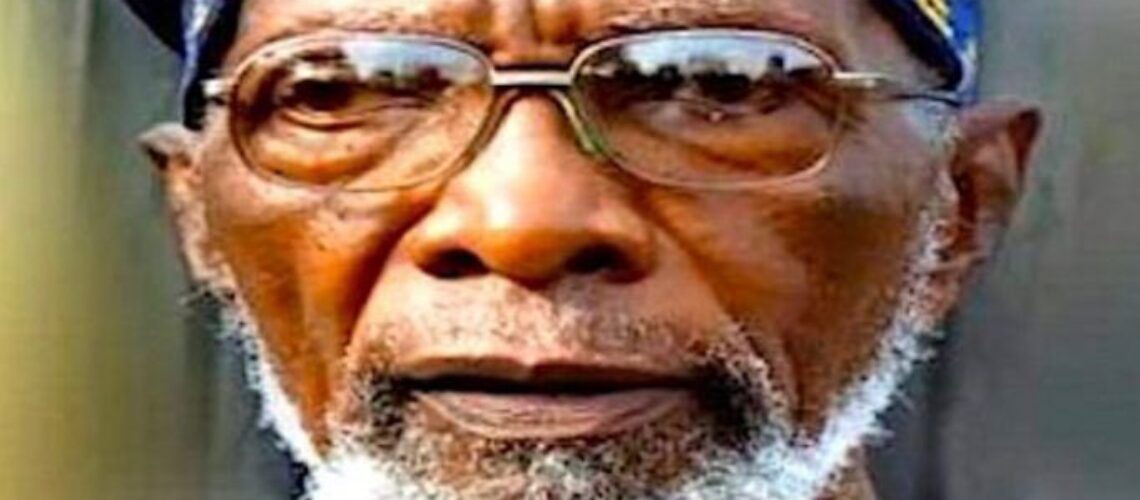
Dr. Segun Osoba, a renowned historian, activist, and mentor, epitomises the convergence of intellectual pursuit and sociopolitical engagement. His 90th birthday offers an opportunity to reflect on his enduring contributions to Nigerian academia, the historiography of post-colonial Africa, and the fight for social justice. Born on January 9, 1935, in Ijebu-Ode, Ogun State, Dr. Osoba’s intellectual legacy is as profound as his commitment to addressing societal contradictions.
Early Life and Education
Dr. Osoba’s formative years were steeped in academic rigour. He attended Ijebu-Ode Grammar School (1947–1953) and the Nigerian College of Arts, Science, and Technology, Ibadan (1954–1956). His intellectual foundation was further solidified at University College Ibadan (1956–1959) and Moscow State University (1963–1967). The latter experience deepened his Marxist ideology, which became a cornerstone of his academic and activist identity.
Career and Contributions to Academia
A Marxist historian of international repute, Dr. Segun Osoba’s scholarship redefined Nigerian and African historiography. During his tenure at the Department of History at Obafemi Awolowo University (OAU), Ile-Ife, from 1967 to 1991, he introduced a political economy approach that challenged the glorification of influential figures in African history. Instead of celebrating the achievements of so-called “great men,” Osoba critically examined their actions within the broader context of socioeconomic structures and their implications for society.
For example, he critiqued Mansa Musa, often lauded as one of Africa’s most legendary leaders, for his extravagant pilgrimage to Mecca, which he argued was both wasteful and economically harmful to the Malian Empire. Osoba drew a provocative parallel between Mansa Musa’s profligacy and the actions of modern African dictators like Mobutu Sese Seko, whose governance similarly prioritised personal aggrandisement over national stability. This reinterpretation, rooted in his Marxian-Leninist framework, underscored the necessity of examining historical events through the lens of class dynamics and material conditions, offering a more nuanced understanding of Africa’s past.
Osoba’s ability to intertwine historical scholarship with social critique was revolutionary. His analysis of the national liberation movement, the role of ethnicity, and factionalism within Nigerian politics from the 1930s to the post-colonial era became foundational for understanding Nigeria’s political landscape. By addressing the economic interests of contending social forces, his work elevated the historian’s role from merely documenting events to actively shaping societal discourse.
Dr. Osoba’s philosophical approach combined academic rigour with a commitment to social justice. His rejection of a professorship at OAU, despite being eminently qualified, underscored his protest against systemic corruption in academia. He chose instead to be addressed as “Doctor,” reflecting his deep-seated principles.
His political economy framework laid the groundwork for a generation of scholars and activists. His focus on the historical processes shaping identity, governance, and societal inequities redefined Nigerian and African historiography. Works such as Nigeria, Nationalism, and Writing History, co-authored with his mentee, explored the evolution of nationalist historiography and critiqued the dominance of ethnic and inter-group histories at the expense of broader political economy narratives.
Dr. Osoba’s intellectual pursuits found resonance in global scholarly circles. His work paralleled the radical traditions of African intellectuals such as Walter Rodney, whose How Europe Underdeveloped Africa championed a political economy lens. The Dar-es-Salaam debates of the 1970s mirrored Dr. Osoba’s efforts to historicize colonial realities and counter neo-colonial ideologies.
The political economy approach championed by Dr. Osoba became a hallmark of radical Nigerian scholarship. Figures like Eskor Toyo, Bade Onimode, and Claude Ake built on his foundations, integrating Marxist and dependency theories into their analyses of African societies.
At Ife, Dr. Osoba championed the spirit of scientific inquiry and healthy skepticism, challenging his students to question prevailing norms and think critically. His influence was profound, inspiring generations of scholars to approach history not as a static collection of facts but as a dynamic, interpretative process. Professor Rasheed Ajetunmobi aptly described him as “a great teacher, an impeccable character, a man of high integrity, a mentor with a difference, and an indisputable philosopher of note.”
Dr. Osoba’s ability to challenge orthodoxies earned him a place among Africa’s intellectual titans. His influence extended beyond academia, inspiring movements advocating for equity and justice.
Contributions to Sociopolitical Activism
Dr. Osoba’s activism was a natural extension of his intellectual pursuits. As a member of the 1979 Constitution Drafting Committee, he and Dr. Yusuf Bala Usman co-authored the Minority Report and Draft Constitution for the Federal Republic of Nigeria, which remains a landmark in Nigeria’s political history. The report advocated for the removal of immunity clauses for political leaders and promoted equitable governance, challenging entrenched power dynamics.
A vocal critic of systemic inequities, Dr. Osoba was unrelenting in exposing the contradictions of the Nigerian ruling elite. His 1978 essay, “The Deepening Crisis of the Nigerian National Bourgeoisie,” critiqued the inability of the elite to transition Nigeria from an agrarian to an industrial society, a failure he attributed to a lack of ideological clarity and cohesion.
Osoba’s commitment to critical inquiry and the scientific spirit aligns him with the legacy of the likes of Tai Solarin. These are values to counter ideological complacency and societal stagnation.
Testimonies and Tributes
Dr. Osoba’s life and work have been celebrated by scholars, activists, and national leaders. At a recent conference in his honour in 2024, Professor Siyan Oyeweso described him as “a moral compass for Nigeria” and “a titan of radical historiography.” The conference, attended by scholars from across the globe, highlighted his contributions to historiography, governance, and social justice.
Dr. Osoba’s refusal to compromise his principles resonates in his work and life. Professor Olutayo Adesina noted that Osoba’s critique of bourgeois politics and systemic inequities has been marginalised in the era of neoliberalism but remains a touchstone for understanding the dynamics of power in post-colonial Nigeria.
President Bola Tinubu lauded Dr. Osoba as one of Nigeria’s finest minds, commending his patriotism and scholarly excellence. His children have further immortalised his legacy by establishing the Osoba Prize for the best Ph.D. dissertation in history or social sciences at OAU.
Conclusion
As Dr. Segun Osoba turns 90, his life and work reflect intellectual integrity, activism, and mentorship. His pioneering contributions to political economy, unwavering commitment to social justice, and profound influence on generations of scholars have left an indelible mark on Nigeria and beyond. Dr. Osoba’s legacy is a testament to the transformative power of historical scholarship and the enduring impact of a life dedicated to truth, equity, and the betterment of society.