
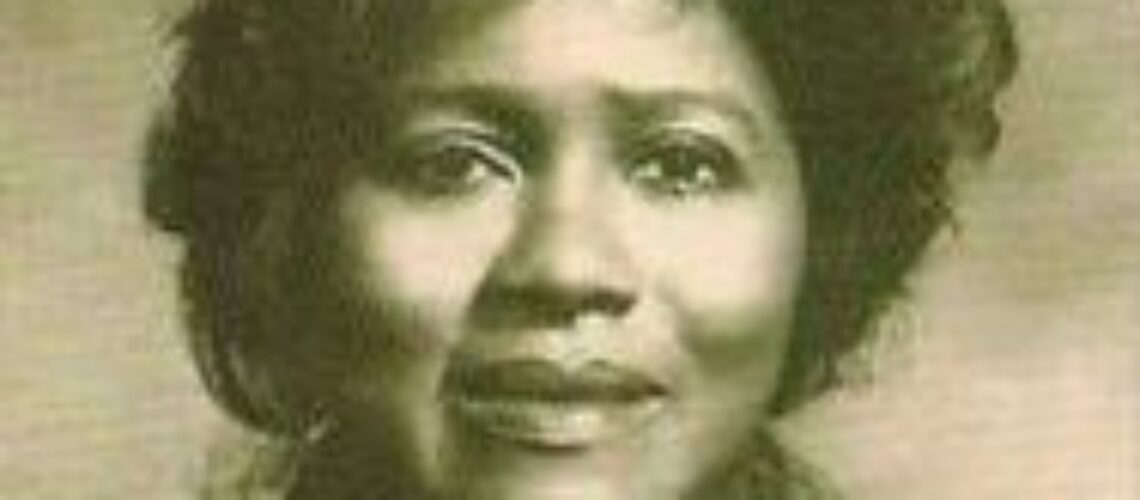
In Nigerian history, the Southwest region stands as a beacon of pioneering achievements, not merely dominated by men but illuminated by the remarkable contributions of women who have broken barriers and charted new territories. Among these trailblazers stands Dr. Simisola Olayemi Onibuwe Johnson (1929-2000), one of Nigeria’s first female dentists, whose determination and excellence etched her name permanently in the nation’s medical history. Her story is about an extraordinary woman who defied societal expectations to become a pathfinder in a male-dominated profession, embodying the spirit of innovation and resilience that characterizes Southwest Nigeria’s contributions to national development.
Early Background
Born in 1929 on Lagos Island in Southwest Nigeria, Simisola Johnson grew up during a transformative period in Nigerian history as the nation was transitioning toward independence from British colonial rule. She was the last of six children born to her parents, Alfred Latunde Johnson, a prominent lawyer and founding director of the National Bank of Nigeria (established in 1933), and Harriet Susan Johnson (née Crowther Nichol).
Young Simisola’s family background was impressive and influential. She descended from a lineage of notable Nigerians who had shaped the country’s history. Her maternal great-great-grandfather was the renowned Bishop Samuel Ajayi Crowther, who had a remarkable life story of his own. Captured into slavery at age 12 from the small town of Osogun (in present-day Iseyin Local Government of Oyo State), he was later rescued from Portuguese slave traders and taken to Sierra Leone. Bishop Crowther became a pioneer in education and linguistics, authoring the first Yoruba dictionary and translating the Bible into the Yoruba language. He was consecrated as the first African Bishop of the Anglican Church and received a Doctor of Divinity from Oxford University.
Additionally, Simisola’s great-grand-uncle was Herbert Macaulay, a grandson of Bishop Crowther and founder of Nigeria’s first political party who actively opposed British colonial rule. Growing up in a household with such deep connections to Nigerian history and education, Simisola was instilled with values of excellence, service, and breaking barriers from an early age.
Educational Background
Dr. Simi Johnson’s educational journey began at the Church Missionary Society (CMS) Girls’ Secondary School in Lagos, where she received her foundational education. Her pursuit of higher education took her overseas to England, where from 1954 to 1957, she attended Sunderland Technical College and Durham University to study dentistry.
1957 marked a historic year for Nigerian women in dentistry when both Simisola Johnson and Grace Adaria Guobadia graduated, becoming the first two female Nigerian dentists. While both women qualified in the same year, Dr. Simi Johnson earned a Bachelor of Dental Surgery (BDS) degree, while Dr. Guobadia received a Licentiate in Dental Surgery (LDS). Dr. Guobadia was appointed into Nigerian Government service slightly earlier, on October 22, 1957, and registered with the Nigerian Medical Council on November 19, 1957. Dr. Simi Johnson was appointed as Government Dental Surgeon in Lagos on July 14, 1958, and officially registered with the Nigerian Medical Council on July 30, 1958.
Not content with her initial qualifications, Dr. Simi Johnson pursued further specialization at the Royal College of Surgeons in Glasgow, where she obtained a Diploma in Orthodontics (DDO RCPS Glasgow) in 1966. This achievement made her Nigeria’s first female orthodontist, setting another milestone in the country’s medical history. Her commitment to academic excellence continued throughout her career, culminating in her registration with the National Postgraduate Medical College of Nigeria in the Faculty of General Dental Practice (FMCGDS) in 1971 as a Foundation Fellow (Registration Number FFE2,3 02/0496).
Professional Career
Dr. Simi Johnson’s professional journey began immediately after her qualification when she returned to Nigeria to serve her country. She started working with the Federal Government on July 14, 1958, as a dental surgeon at the General Hospital in Lagos, where she worked from 1958 to the early 1960s. During this period, she collaborated with other dental professionals including Drs. Nestor Hollist (who later became a Professor), N.E. Henshaw, J.R. Ana, G. Obuekwe, Inyang, O. Ogundipe, and Major Sho-Silva.
Her career trajectory was impressive as she rose through the ranks to become the Federal Chief Consultant Dentist in the Federal Ministry of Health, a position that allowed her to influence dental healthcare policies and practices nationwide. This appointment demonstrated not only her clinical expertise but also her leadership capabilities in a field where women were severely underrepresented.
As a pioneer in her profession, Dr. Simi Johnson played a crucial role in the development of dentistry in Nigeria. In 1962, she was a founding member of the Nigerian Dental Association, working alongside colleagues such as Dr. N.E.D. Obasi, Dr. Otun, Dr. N.O. Ogundipe, and others to establish this professional body. Her contributions to the association were recognized when she was elected Vice-President in 1977, and later honored with the Distinguished Dental Practitioner award in 1994.
Contributions to Dental Education
Dr. Simi Johnson’s impact on dental education in Nigeria was substantial and far-reaching. She served as the Principal of the Federal School of Dental Hygiene and Technology, where she helped train generations of dental healthcare professionals who would go on to serve communities across Nigeria.
Her commitment to education extended to universities as well. She was an associate lecturer in dentistry at the University of Lagos during its developmental years, helping to address the scarcity of dental teachers and demonstrators at that time. Together with colleagues like Dr. Otun and Dr. Subair, she played a vital role as a clinical demonstrator and associate lecturer, bridging the gap between theoretical knowledge and practical application for dental students.
Perhaps one of her most significant contributions to dental education was her participation in the international team that wrote the proposal for the creation of the Dental School at Obafemi Awolowo University (then University of Ife) in Ile-Ife in 1973. Working alongside distinguished professionals including Prof. G. Nixon, Dean of Manchester School of Dentistry, Prof. L. Hardwick, and several Nigerian academics, she helped establish a foundation for dental education that continues to produce qualified professionals today. The school admitted its first cohort of nine students in September 1975, marking a new chapter in dental education in Nigeria.
Dr. Simi Johnson was also instrumental in revitalizing the Faculty of General Dental Practice of the National Postgraduate Medical College of Nigeria. When the Faculty, which had been constituted in 1979, was declared moribund in 1988 and suspended in 1989 for non-performance, Dr. Simi Johnson and others intervened to resuscitate it. Their request was granted at the 43rd senate meeting of the National Postgraduate Medical College of Nigeria held on December 8, 1994, ensuring the continuation of postgraduate dental education in the country.
Political Career and Public Service
Beyond her contributions to dentistry, Dr. Simi Johnson was a distinguished public servant who ventured into politics during Nigeria’s Second Republic. In 1983, she was appointed as the Minister for Social Development and Culture, a position that allowed her to influence social policies and cultural development at the national level.
Her political career was characterized by her advocacy for women’s rights and gender equality. She was heavily involved in the inter-sectoral national committee on women’s development, which was tasked with establishing a working relationship between the government and women’s organizations across the country.
Even after the end of the Shagari administration, Dr. Simi Johnson continued to play an advisory role in gender affairs. In 1985, she led Nigeria’s delegation to the Third World Conference on Women, held in Nairobi, Kenya. This conference recommended that member nations eliminate discrimination against women and adopt strategies to include women’s participation in development efforts.
Dr. Simi Johnson headed the women’s advisory committee that was charged with making recommendations to Babangida’s administration about strategies to increase women’s participation in government. Among other suggestions, the committee recommended the creation of a Ministry for Women’s Affairs, which eventually materialized in 1989 with the establishment of the National Commission for Women, supported by First Lady Maryam Babangida.
Philanthropy and Other Interests
Dr. Simi Johnson’s contributions extended far beyond her professional and political careers. She was a multifaceted individual with diverse interests and a strong commitment to community service and philanthropy.
She served on various philanthropic organizations, including the Nigerian Red Cross and the Central Executive Council of St. John’s Council of Nigeria. Her commitment to women’s empowerment was evident in her role as President of the Lagos State Chapter of the National Council of Women Societies and as National President of Business and Professional Women of Nigeria from 1976 to 1981.
Dr. Simi Johnson was also a member of the Zonta International Club in Lagos and a Trustee of the Nigerian Sickle Cell Association, demonstrating her concern for public health beyond dentistry. Like her ancestor Bishop Crowther, she maintained close connections to her ancestral roots in Osogun, at one point providing a borehole facility for the community which had previously relied on stream water or wells.
Her interests were not limited to healthcare and social development. She was a lover of music and a prominent member of the Nigeria Jazz Club. Additionally, she was a keen supporter of sports and held the distinction of being the only female member of the Nigerian National Olympic Committee that facilitated the participation of Nigerian athletes at the Munich Olympics in 1972.
Dr. Simi Johnson also served on the boards of several companies and was Chairperson of Afribank International, Nigeria, bringing her leadership skills to the business sector as well.
She was known for her love of frejon (a Nigerian pudding/dessert with origins from the descendants of returnees from Brazil to Nigeria after the abolition of slavery) and hosted an annual breakfast party centered around this dish for many years.
In recognition of her numerous contributions to society, Dr. Johnson received several traditional titles, including “Yeye Rise of Akure,” “Yeye Oba of Ijesha Isu Ekiti,” and “Yeye Ilu of Lagos.” In 1990, she was conferred with a special commendation award by the Lagos State Government and received the Knight Official of the Humane Order of African Redemption from the Republic of Liberia.
Legacy and Impact
Dr. Simisola Olayemi Onibuwe Johnson’s life and career exemplify the pioneering spirit that has characterized many women from Southwest Nigeria who have made significant contributions to national development. As one of the first female dentists in Nigeria and the country’s first female orthodontist, she broke gender barriers in healthcare and opened doors for generations of women to enter the dental profession.
Her multifaceted career spanning dentistry, education, politics, and philanthropy demonstrates the breadth of her capabilities and her commitment to serving her country in various capacities. Through her roles in dental education, she helped shape the training of countless dental professionals who continue to provide essential healthcare services across Nigeria today.
Dr. Simi Johnson’s advocacy for women’s rights and gender equality through her political career and involvement in women’s organizations contributed to advancing the status of women in Nigerian society and governance. Her participation in international forums like the Third World Conference on Women helped bring global perspectives on gender issues to Nigerian policymaking.
Perhaps most importantly, Dr. Johnson’s life story serves as an inspiration for young Nigerian women, particularly those aspiring to careers in healthcare and other traditionally male-dominated fields. Her ability to excel professionally while contributing to broader societal development exemplifies how women can break barriers and create lasting change.
When Dr. Simi Johnson passed away at her residence in Palm Grove Estate, Lagos in 2000 at the age of 71, she left behind a legacy that continues to influence Nigerian dentistry, women’s empowerment, and public service. In the poignant words of her daughter, Gbemisola Shasore, “All her life, she was doing one thing or the other for charity. Her shoes are too big to step into.”
The story of Dr. Simisola Johnson adds to the rich record of achievements by women from Southwest Nigeria who have made their mark not only in national history but on the world stage. Her life stands as a testament to the fact that with determination, education, and a commitment to service, barriers can be broken and new paths forged for future generations to follow.