
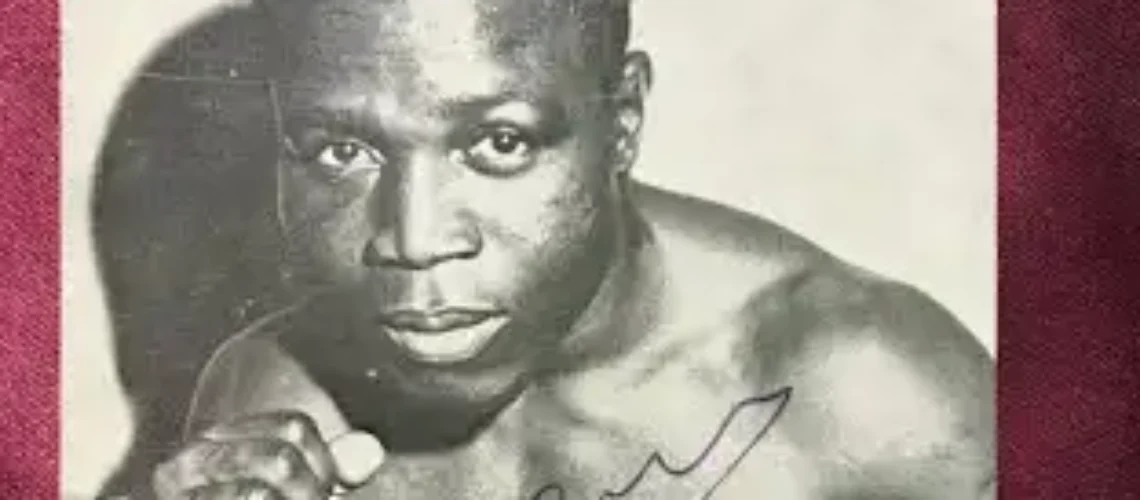
Nojim Maiyegun’s story is one of resilience against local bullying, triumph as an Olympic medalist, and a quest for national recognition that never fully materialized. Born on February 21, 1941, on Glover Street, Lagos Island, Nigeria, Maiyegun grew up in a bustling neighborhood where he was known as a dutiful child who often went about his errands unnoticed. His early life in Lagos was marked by challenges and experiences that shaped his path toward becoming Nigeria’s first Olympic medalist. Despite his groundbreaking achievements, Maiyegun’s legacy remains underappreciated in his home country and among his Yoruba people.
From Local Bully to International Boxing Champion
Maiyegun’s introduction to boxing was born out of necessity rather than choice. At the age of 16, he faced harassment from a local bully at a public water tap. This experience pushed him to learn how to defend himself, leading him to seek the help of Bonny Ade, who trained him secretly for six months. This initial encounter with boxing laid the foundation for what would become a remarkable career. While there is little documentation on Maiyegun’s early education, it is evident that his formative years were heavily influenced by the vibrant and sometimes harsh environment of Lagos, where he honed his boxing skills and developed a reputation as a formidable fighter.
Rise in Boxing and Significant Fights
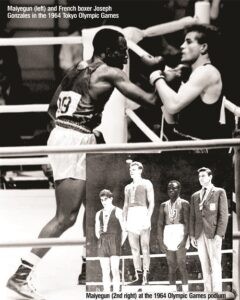 Maiyegun’s rise in boxing was meteoric, marked by a series of significant fights that showcased his talent and determination. He fought a total of 16 times, winning 12 bouts, with 10 of those victories coming by knockout. His powerful left punch and refined techniques made him a formidable opponent in the ring. One of his most memorable fights took place at the 1964 Tokyo Olympics, where he won a bronze medal in the men’s light middleweight (71 kg) category, marking Nigeria’s first-ever Olympic medal. This achievement was monumental, as it not only placed Nigeria on the global sports map but also inspired future generations of Nigerian athletes.
In the 1964 Olympics, Maiyegun defeated Great Britain’s William Robinson in just one minute and 59 seconds in the second round. He went on to beat Denmark’s Tom Bogs in the quarter-finals before losing to France’s Joseph Gonzalez in the semi-finals. Despite not winning gold, Maiyegun’s performance was celebrated as a historic achievement for Nigeria.
Additionally, Maiyegun fought in a world title bout despite being partially blind, showcasing his indomitable spirit and determination to succeed against all odds.
Medals, Honors, and Legacy
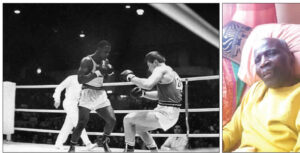 Nojim Maiyegun’s journey to becoming a celebrated athlete is marked by a series of significant accomplishments throughout his career.
1960 Independence Celebration Tournament: Maiyegun’s early success came at the 1960 Independence Celebration Tournament, where he earned a medal. This event was significant as it marked Nigeria’s newfound independence, and Maiyegun’s performance helped to boost national pride and enthusiasm for sports in the newly independent nation.
1964 Tokyo Olympics: Maiyegun’s most notable achievement came in 1964 when he won a bronze medal in the men’s light middleweight (71 kg) category at the Tokyo Olympics. This victory was historic, as it marked Nigeria’s first-ever Olympic medal, establishing him as a pioneer in Nigerian sports history and inspiring future athletes to pursue excellence on the international stage.
1966 Commonwealth Games: Building on his Olympic success, Maiyegun competed in the 1966 Commonwealth Games in Kingston, Jamaica, where he won another bronze medal in the light middleweight category. This achievement further solidified his reputation as one of Nigeria’s top boxers and contributed to the growing international recognition of Nigerian athletes.
African Championship: Maiyegun also achieved success on the African continent by securing a gold medal at the African Championship. This accomplishment demonstrated his dominance in boxing and his ability to compete and win against top athletes within Africa, further boosting his profile and legacy.
Impact and Legacy
Maiyegun’s accomplishments had a lasting impact on Nigerian sports. His 1964 Olympic bronze medal opened the door for future Nigerian athletes, proving that they could compete and excel on the world stage. His success paved the way for other notable Nigerian boxers like Hogan “Kid” Bassey and Dick Tiger, who also achieved significant success. Maiyegun’s story of resilience continues to inspire young athletes in Nigeria, motivating them to pursue their dreams despite obstacles. His victory became a source of national pride and a driving force in the development of sports in Nigeria.
Challenges and Lack of Recognition
 Despite his achievements, Nojim Maiyegun faced significant challenges throughout his career and life. One of the most severe challenges he faced was partial blindness, which ultimately cut short his dream of winning a world title. Despite this, he continued to fight and even participated in a world title bout, showcasing his resilience and determination.
After his boxing career ended, Maiyegun faced financial difficulties. He had to take up menial jobs to survive, working as a street cleaner and janitor in Austria for 28 years. This period was particularly tough as he had to be accompanied to carry out his duties due to his visual impairment. His story is a stark reminder of the often harsh realities faced by many athletes after their careers end.
Moreover, Maiyegun did not receive the recognition and support he deserved from his home country. In his later years, Maiyegun battled an unnamed illness for several months before his death. Despite being Nigeria’s first Olympic medalist, he passed away last week largely uncelebrated and forgotten by the nation he once brought glory to. This lack of recognition extended to his fellow Yoruba people, who also failed to adequately celebrate one of their own. His story highlights the need for better support and recognition for athletes who have made significant contributions to their country.
Conclusion
From defending himself against a local bully to becoming Nigeria’s first Olympic medalist, Nojim Maiyegun’s life is an inspiring tale of overcoming adversity. However, his story is also a poignant reminder of the need for better support and recognition for athletes who bring glory to their countries. While Maiyegun’s legacy continues to inspire new generations of athletes, it also prompts reflection on how we honor and support our sports heroes, both locally and internationally. His life serves as both an inspiration and a call to action for the Yoruba people to ensure that future athletes are celebrated and supported throughout their careers and beyond. Even if the nation forgets, ethnic community should not.