
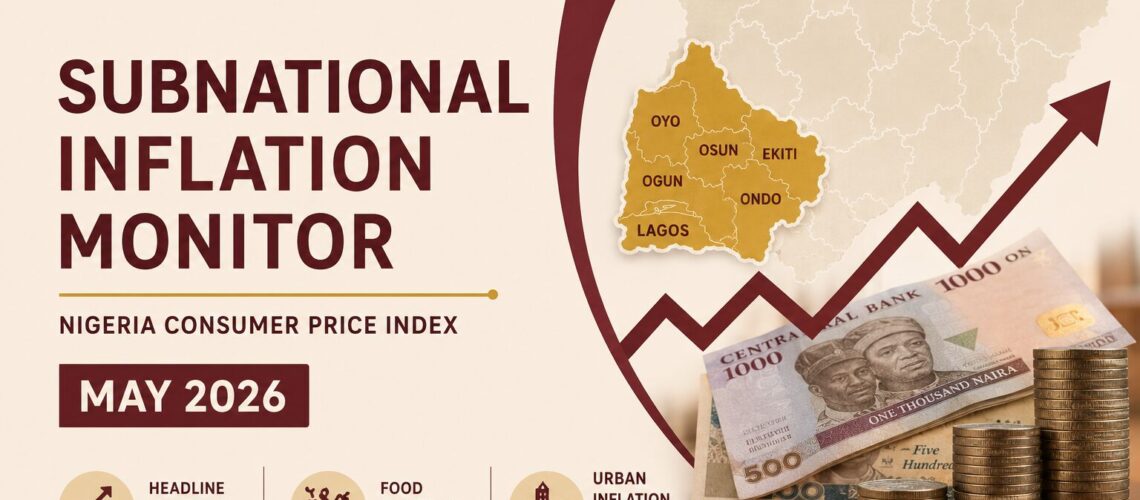
Nigeria’s Inflation Picture: What May 2026 Tells Us About the Southwest Region
Nigeria’s headline inflation rose slightly to 15.93% in May 2026, up from 15.69% in April. Even so, month-on-month price pressures kept easing, falling to 1.75% from 2.13%, a sign that the broader disinflation trend is holding. Food remains the heaviest burden on households, with food inflation climbing to 16.96% year-on-year. Notably, urban inflation (16.07%) overtook rural inflation (15.60%) for the first time this cycle, suggesting that cost pressures are creeping more into Nigeria’s cities than its countryside.
The Southwest tells a more uneven story. The zone climbed to third place nationally in average food inflation (18.02%), now above the national rate, even though its overall cost-of-living reading (14.84%) stayed below the national headline, thanks largely to lower numbers from Oyo and Ogun.
Ondo’s food prices have nearly quadrupled since January, from 5.5% to 23.1% in May, making it the zone’s most pressing food concern. Oyo posted the lowest all-items inflation in the Southwest (9.88%), yet its food inflation jumped to 21.04%, exposing a widening gap between easing non-food costs and mounting food stress. Ogun, despite holding the second-lowest all-items rate (11.63%), saw food prices spike 6.86% in a single month, a figure worth watching alongside Osun’s own 6.55% monthly jump.
Lagos was the lone bright spot, posting the zone’s only monthly drop in food prices (-0.22%), likely thanks to its port access and stronger distribution network.
For policymakers, the priorities are clear: tackle Ondo’s deepening food crisis, keep a close eye on the sudden spikes in Ogun and Osun before they harden into yearly trends, and study what’s working in Lagos.
This brief is drawn from DAWN Commission’s full Subnational Inflation Monitor for May 2026.
Read the complete report here