
The Development Agenda for Western Nigeria (DAWN) Commission hosted a roundtable discourse titled “Beyond Administrative Boundaries: Reimagining Nigeria’s Development through Regional Integration.”
The event, held at the Commission’s office in Cocoa House, Ibadan, marked the 60th birthday celebration of Dr. Kayode Fayemi, former Governor of Ekiti State, while addressing critical issues of regional development and integration in Nigeria.

It was a significant gathering of academics, policymakers, and development experts, including the keynote speaker, Remi Aiyede, a distinguished professor of political institutions, governance and public policy at the University of Ibadan. The discussants included: Abiodun Folawewo, a professor of macroeconomics, labour and development economics and also the Dean of the Faculty of Economics and Management Sciences, University of Ibadan; Olugbemiga Samuel Afolabi, a professor of comparative politics and political theory at the Department of Political Science, Obafemi Awolowo University, Emmanuel Osewe Akubor, an associate professor at the department of history, Obafemi Awolowo University, and Tahir Ijaiya, a graduate student at the department of political science, University of Ibadan.
“The Commission decided to celebrate Dr. Fayemi because he is one of the prime movers of regional cooperation among the sub-nationals, even before he became a governor,” noted Dr. Seye Oyeleye, DAWN Commission’s Director General, while acknowledging Fayemi’s instrumental role in establishing DAWN Commission.

Historical Context and Evolution
The discussions placed Nigeria’s regional integration efforts within a rich historical context, tracing back to pre-colonial trade networks that connected various ethnic groups through commerce and shared economic interests. As experts noted, the Hausa-Fulani, Yoruba, and Igbo peoples engaged in extensive trade across the Sahel, Niger-Benue waterways, and Atlantic coast, creating interdependent economic zones long before modern governance structures emerged.
Rethinking Regional Development
Professor Remi Aiyede, delivering the keynote address, highlighted three recent developments that have brought intergovernmental relations in Nigeria to the forefront: the Supreme Court judgment on local government autonomy, the creation of the Ministry of Regional Development and regional development commissions, and the proposed tax reform bills. These developments, according to Aiyede, have sparked significant debates and controversies across federal, state, and local government levels.
He emphasised that regional development commissions serve as vital intermediaries between the federal government and constituent states. “They are essential for coordinating policies, addressing regional issues, and ensuring balanced development across the federation,” Aiyede stated, adding that horizontal initiatives among volunteering states are more effective than top-down federal government interventions.
Theoretical Foundations and Contemporary Challenges of Regional Commissions
The roundtable provided a comprehensive theoretical framework for understanding regional development. Experts discussed various theories, including Growth Pole Theory, which argues that development radiates outward from economically strong regions, and New Regionalism, which emphasises cooperation-driven development.
The presenters emphasised the importance of understanding regional imbalances in Nigeria, attributing them to factors such as:
- Uneven distribution of natural resources
- Colonial legacy and administrative standards
- Disproportionate allocation of investment funds
- Regional economic specialisation
- Government policies favouring specific urban
- Corruption and mismanagement
- Weak institutional frameworks
- Sustainability concerns
- Environmental factors affecting infrastructure development
- Inadequate funding and abandoned projects
- Ongoing security challenges in certain regions
The discourse revealed significant concerns about the proliferation of regional development commissions in Nigeria. While these bodies are established with noble intentions, experts at the roundtable warned about potential bureaucratic inefficiencies and governance challenges that could arise from their multiplication.
Drawing from the experiences of existing commissions like the Niger Delta Development Commission (NDDC), participants highlighted how corruption, mismanagement, and weak institutional frameworks have undermined their effectiveness. Professor Aiyede particularly noted that while regional development commissions may offer targeted approaches to addressing specific challenges, their proliferation risks exacerbating existing governance issues.

The Way Forward
The roundtable generated robust discussions on alternative approaches to regional development. Discussants emphasised that Nigeria’s development story cannot be rewritten using the same fragmented, state-centered approach that has historically constrained its economic potential.
The experts proposed several key recommendations for enhancing regional development:
- Shift to Geo-economic Zones: Moving from traditional geopolitical zones to geo-economic zones, focusing on production rather than resource sharing
- Participatory Development: Involving local communities in all phases of development projects
- Commitment Mechanisms: Implementing continuance, cohesion, and control mechanisms borrowed from organisational studies
- Accountability Frameworks: Establishing vertical, horizontal, and diagonal accountability systems
- Merit-based Leadership: Emphasising competence in regional commission management
- Promoting horizontal cooperation among states: Fostering greater collaboration and dialogue among all tiers of government
Oyeleye emphasised the organisation’s readiness to work as a think tank for the newly established South West Development Commission (SWDC). He highlighted how the Commission’s experience and existing templates could guide regional development efforts in the region..
Fayemi’s Reflections
In his contributions, Dr. Kayode Fayemi offered a sobering perspective on Nigeria’s development journey. Comparing Nigeria’s economic trajectory with China’s since 1979, he expressed concern about missed opportunities for national development. “If taken seriously, regional commissions may be our accelerated road to development. We have to be clear of what we want for ourselves,” Fayemi stated.
The former governor emphasised that there is no one-size-fits-all approach to regional development, arguing that strategies should be tailored to each region’s specific needs and priorities. He urged DAWN Commission to continue its collaboration with academics and experts to address the challenges facing the Southwest Region and Nigeria at large.

Future Implications
The roundtable discussions underscored the critical importance of moving beyond mere resource sharing to focus on productive development strategies. Experts emphasised the need for regional integration that leverages economic synergies often stifled by administrative borders.
The consensus among participants was that successful regional development requires:
- Granting regional commissions necessary autonomy
- Implementing institutional reforms aligned with economic realities
- Ensuring active participation of businesses and local communities
- Maintaining transparency and accountability in governance
- Fostering sustainable intergovernmental collaboration
Inter-Regional Cooperation
The roundtable highlighted successful examples of inter-regional cooperation, such as the security collaboration between Niger, Kwara, and Oyo states, and the LAKE Rice initiative between Lagos and Kebbi. Experts emphasised that such existing collaborative frameworks could be scaled up to the regional level, leveraging institutions like the National Economic Council and Nigeria Governors’ Forum.
Conclusion
The DAWN Commission roundtable has contributed significantly to the ongoing discourse on regional development in Nigeria. By bringing together diverse stakeholders and expertise, the event has highlighted both the challenges and opportunities in pursuing regional integration as a pathway to national development.
As Nigeria continues to grapple with development challenges, the insights and recommendations from this gathering provide valuable guidance for policymakers and stakeholders working towards effective regional integration and sustainable development.
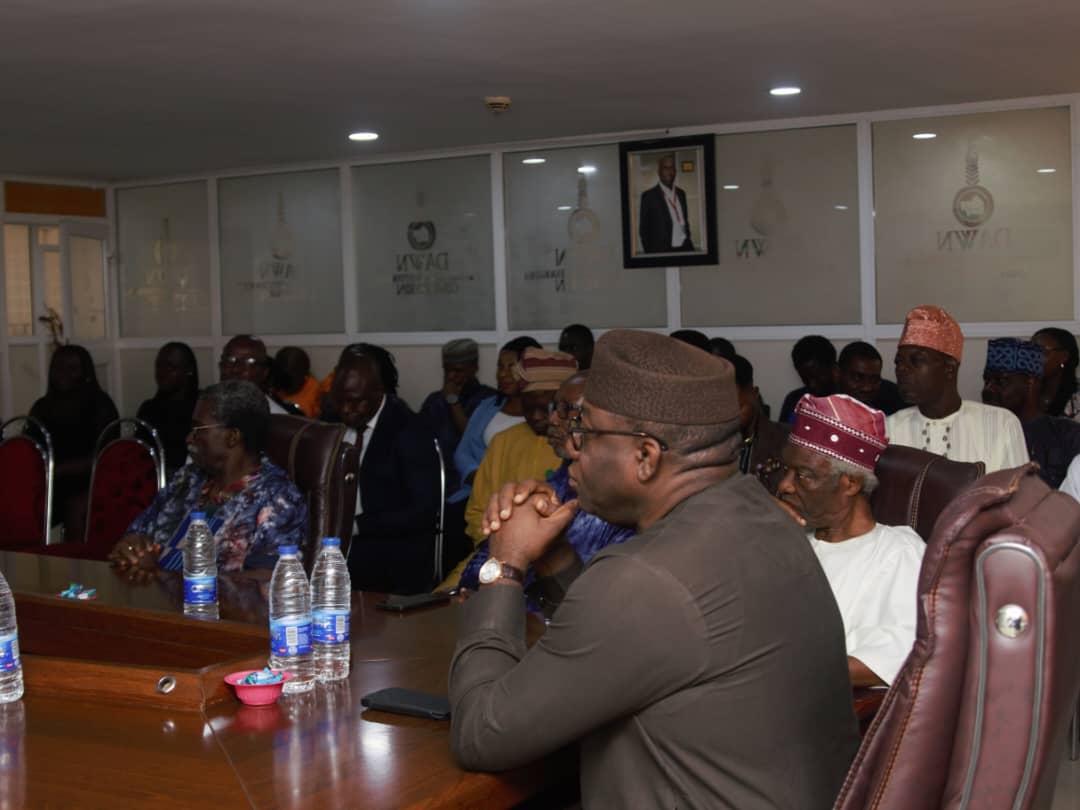
The event not only honoured Dr. Fayemi’s contributions to regional development but also reinforced the importance of collaborative approaches in addressing Nigeria’s development challenges. As DAWN Commission continues its role as a think tank for regional development, the principles and strategies discussed at this roundtable will undoubtedly influence future policy directions in Western Nigeria and beyond.