
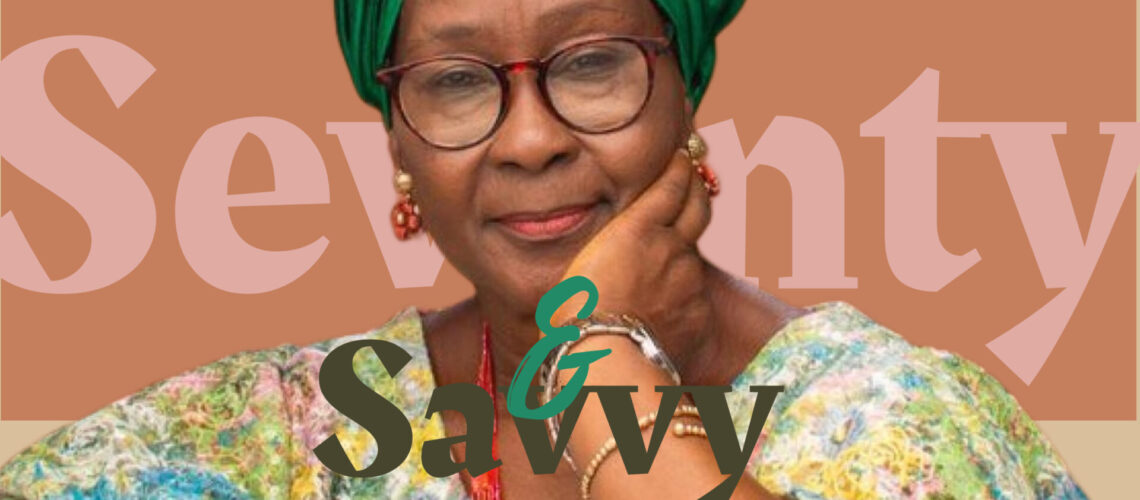
In the quaint town of Sagamu, the story of Dr. Sade Taiwo unfolded against the backdrop of Nigeria’s pioneer history as an independent country. She was born on November 29, 1953 as Sade Adegbola, to the late Rev Dr. Adeolu Adegbola, a trailblazing Methodist minister instrumental in establishing Nigeria’s first indigenous Methodist seminary, and late Mrs Adegbola. Sade’s early years were shaped by a unique and enriching educational journey that set the stage for her later achievements.
She started her education at St Paul Anglican Primary School in Ijokun Sagamu. But following the gale of exit of expatriate workers after Nigeria’s Independence, Sade’s family moved to Ibadan, where her father was sent to replace a departing British Methodist minister.
She completed her primary education at St Luke Demonstration School in Molete. This marked the beginning of Sade’s exceptional display of curiosity and courage, attributes that marked her for strong leadership in her chosen career. At such a young age, she had a curious mind and a courageous heart to decide the combination of subjects she wanted to study for her A’ Levels – even when the combination was not available in her school and it meant she had to combine studies at both St Anne’s Secondary School, Ibadan—the first female secondary school in Nigeria—and Ibadan Grammar School. The extra sacrifice of making seesawed treks between both schools appears to be her preparation for taking on daring ventures, even when such is unpopular.
The journey continued as she excelled academically, achieving outstanding results in her Cambridge A-levels and earning admission to study Economics at the University of Ife (now Obafemi Awolowo University) in Osun State. She pursued a Master’s in Business Administration from the esteemed University of Ibadan.

Reflecting her family’s belief that intellectual output and societal contribution surpass mere qualifications, Sade pursued a Ph.D. later in life. This reflected her commitment to applying knowledge and making meaningful contributions to society, a philosophy that guided her throughout her academic endeavours.
Embarking on her professional journey, Sade showed independence and purpose. Starting with one of Nigeria’s pioneering private consultancy organisations, Natural Resources Development Services (NARDS), established by Professor Adewoye, she left an indelible mark that paved the way for a successful career in the consultancy sector. Her stint at the Nigerian Institute for Social and Economic Research (NISER) during the compulsory National Youth Service Corps (NYSC) further solidified her trajectory, where she became a full-time staffer and rose to the position of Senior Researcher until her retirement in 2018.
Sade’s background significantly contributed to her success as a researcher. Her early commitment to academic rigour, fostered by her inquisitive nature and unique intuitive ability to spot where the leverage lies – ever before the 80/20 rule became a buzz, Sade exemplified it. Her bold temperament played a crucial role in her leadership exploits across various domains, challenging norms and paving the way for her distinctive focus on entrepreneurship.
Dr. Sade Taiwo’s research on entrepreneurship challenged societal preconceptions and advocated for the sector’s development as the foundation for societal advancement. Her influence transcended academia, shaping public policies related to entrepreneur grants, loans, and other benefits provided by the federal government and international organisations.
Beyond NISER, Sade’s career extended to other institutions, including part-time lecturing at the University of Ibadan on Micro-financing and active participation in both governmental and non-governmental research and programmes. Notably, she recently participated as a lead consultant in agricultural policy development for the six Southwest states, a project funded by USAID in collaboration with Life and Peace Development Organisation (LAPDO) and DAWN Commission. The thrust is to ensure a gender friendly and inclusive agricultural policy. This effort has led to budgetary allocation specifically for women and people living with disabilities within the agricultural sector.
As the current director of the Centre for Enterprise Development and Action Research (CEDAR), Dr. Sade Taiwo continues to facilitate programmes that contribute to the development of micro and small enterprises. Her focus on services such as business plan development, microfinance referrals, mentoring, and technology adoption, particularly for women in agriculture and rural farmers, underscores her dedication to empowering marginalised communities.
Dr. Sade Taiwo, a passionate advocate for Southwest development, has made significant contributions to the progress of Southwest Nigeria through her active involvement in shaping policy frameworks and sessions that led to the publication titled “Development Agenda for Western Nigeria: Strategy Roadmap.” Her role as a development consultant and policy researcher continues to provide valuable insights and expertise to DAWN Commission. Being a dedicated Yoruba with a firm commitment to the development of the Yoruba homeland, she not only played a key role in establishing the Yoruba Academy, but also contributed innovative ideas that shaped its inception. Her ongoing commitment underscores her dedication to the advancement of the Southwest region.
Beyond her professional endeavours, Sade’s nurturing spirit extends to her personal life, earning her the reputation of a mother figure. Her commitment to the well-being of family, relatives, and close associates reflects the values of good home training that define her holistic approach to life. Her younger brother, Dr. Tunde Adegbola, recalled with emotional gusto how the young Sade had willingly and frequently taken the punishment due to him. Their father, as the then provost, moved the renowned Emmanuel College of Theology from Kudeti to its present location in Samonda. That meant their children had to commute daily from Samonda to Molete every school day. On some days, the young Tunde would lose his transport fare. Instead of allowing her younger brother to trek the distance, Sade would give her fare to his brother and instruct him to wait for her at a certain junction. She would trek there to meet him.
Dr. Sade Taiwo’s journey is not merely a tale of academic success but an interesting narrative of a visionary public policy architect. Her legacy is one of leadership that unites academia and society under the common goal of societal advancement through strategic public policy making. Dr. Sade Taiwo’s journey epitomises a steadfast commitment to breaking barriers, nurturing those around her, and translating knowledge into tangible benefits for the public.