
Organised by the Development Agenda for Western Nigeria (DAWN) Commission
PREAMBLE
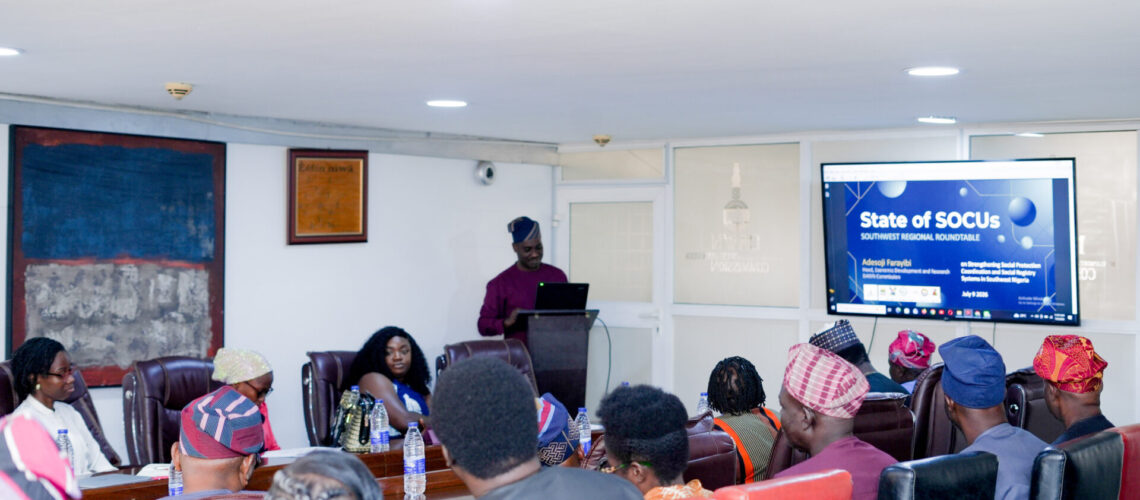
The Development Agenda for Western Nigeria (DAWN) Commission convened a one-day Southwest Regional Roundtable on Strengthening the Operational Effectiveness of State Operations Coordinating Units (SOCUs) and Enhancing the utilisation of State Social Registers (SSRs) for inclusive development.
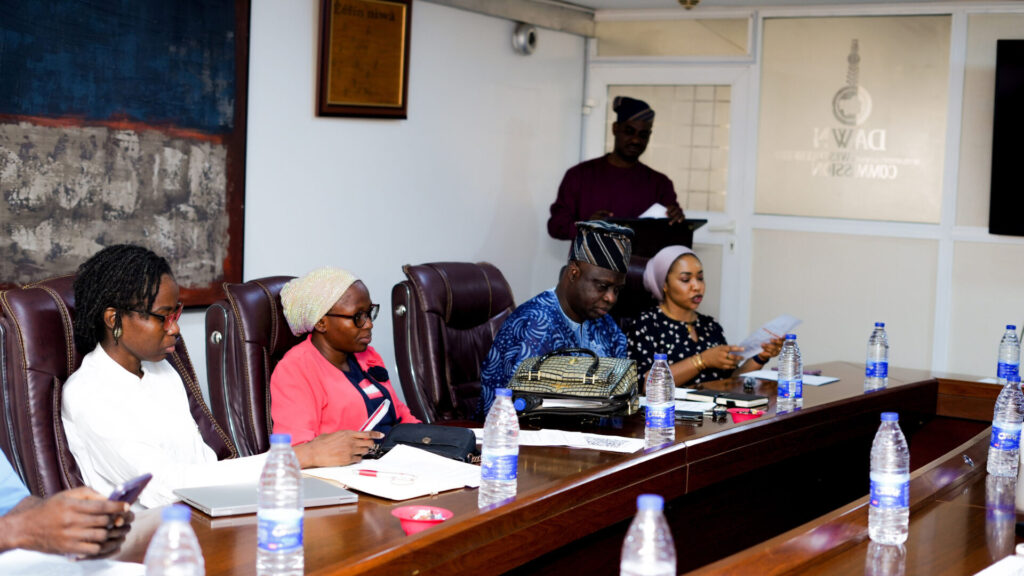
The Roundtable brought together representatives of State Operations Coordinating Units (SOCUs), State Cash Transfer Units (SCTUs), Ministries of Economic Planning, Ministries of Health, State Health Insurance Agencies, the National Identity Management Commission (NIMC), UNICEF Social Policy Section, development partners and other stakeholders from across the Southwest region.
The meeting provided a strategic platform for participants to examine the current state of social protection data systems, identify implementation bottlenecks, exchange experiences across states, and develop practical recommendations for strengthening social protection coordination and evidence-based planning in Southwest Nigeria.
Following extensive deliberations, participants resolved as follows:
KEY OBSERVATIONS
Participants observed that:
- State Social Registers have evolved beyond being beneficiary databases and should now serve as strategic planning tools for government decision-making, poverty reduction, health insurance enrolment, disaster response, climate adaptation and targeted social investments.
- Significant investments have been made in developing State Social Registers across the Southwest; however, utilisation of the data for planning and policy remains below expectation.
- Data quality remains a major concern due to outdated household information, incomplete records, irregular updates and insufficient mechanisms for continuous expansion of the registers.
- The absence of harmonised standards across states has limited interoperability and reduced opportunities for regional collaboration and comparative learning.
- Weak institutional ownership and inadequate domestic financing continue to threaten the sustainability of SOCUs beyond donor-supported programmes.
- Parallel beneficiary databases maintained by different programmes and agencies contribute to duplication of interventions, inefficient targeting and the risk of multiple benefits accruing to the same households.
- Integration of National Identification Numbers (NINs) into State Social Registers remains critical for improving beneficiary verification, transparency and service delivery, although operational challenges persist, particularly in rural communities.
- Participants acknowledged that vulnerability is dynamic rather than static; therefore, social protection systems must continuously identify and accommodate households affected by economic shocks, health emergencies, displacement, climate change and other vulnerabilities.
- Political interference and insufficient adherence to evidence-based targeting continue to undermine the credibility and effectiveness of some social intervention programmes.
- Public awareness of the purpose and benefits of the State Social Register remains low, resulting in misconceptions and limited citizen participation during registration exercises.
- Stronger collaboration is required among Ministries, Departments and Agencies, particularly Ministries of Economic Planning, Health, Education, Agriculture, Social Protection, State Health Insurance Agencies, State Cash Transfer Units and NIMC, to maximise the value of the State Social Register.
- Participants recognised the importance of regular peer learning among Southwest states to promote innovation, improve implementation and share successful practices.

RESOLUTIONS
After robust discussions, participants resolved to:
Strengthening State Social Registers
- Institutionalise the State Social Register as the primary database for identifying and targeting vulnerable households for all government social protection interventions.
- Promote continuous update and expansion of the State Social Register rather than relying solely on periodic large-scale enumeration exercises.
- Harmonise minimum data standards across Southwest states to improve data quality, comparability and interoperability.
- Strengthen community validation processes to improve the accuracy and credibility of household information.
Institutional Strengthening of SOCUs
- Advocate the establishment of dedicated budget lines for SOCUs within state budgets to ensure long-term sustainability.
- Position SOCUs as permanent institutional structures within state governments with clearly defined mandates and operational responsibilities.
- Accelerate the development and implementation of state social protection policies and legal frameworks to strengthen institutional ownership.
Data Integration and Digital Transformation
- Accelerate integration of State Social Registers with the National Identification Number (NIN) database to improve beneficiary authentication and eliminate duplication.
- Improve collaboration between NIMC and state governments to simplify NIN enrolment, verification and correction processes, particularly for vulnerable populations.
- Strengthen interoperability between State Social Registers, State Health Insurance Agencies, State Cash Transfer Units and other government databases.
Evidence-Based Planning and Service Delivery
- Mainstream the use of State Social Registers into state planning, budgeting, health insurance enrolment, emergency response, climate resilience programmes and targeted subsidy delivery.
- Develop mechanisms for tracking households across multiple interventions to minimise duplication and improve accountability.
- Strengthen monitoring systems that support households to graduate sustainably from poverty through skills development and economic empowerment initiatives.
Governance and Accountability
- Reduce political interference in beneficiary selection by ensuring all interventions are guided by transparent, evidence-based data.
- Discourage the creation of parallel political beneficiary lists and promote the State Social Register as the source of truth for social protection interventions.
- Strengthen data governance while ensuring compliance with applicable data protection and privacy laws.
Awareness and Community Engagement
- Intensify public sensitisation campaigns to improve understanding of the objectives and benefits of State Social Registers.
- Strengthen community participation throughout registration, validation and update exercises to improve trust and ownership.
Regional Collaboration
- Establish a Southwest SOCU Community of Practice to facilitate continuous peer learning, technical support and exchange of innovations.
- Develop a Southwest Regional Learning Framework that enables states to share implementation experiences, monitor progress and document best practices.
- Institutionalise periodic regional roundtables hosted by States and coordinated by DAWN Commission to sustain dialogue on social protection coordination and evidence-based planning.
WAY FORWARD
Participants agreed that strengthening State Social Registers is fundamental to improving governance, promoting inclusive development and ensuring that limited public resources reach those who need them most.
The Roundtable therefore called upon state governments, development partners and relevant institutions to prioritise investments that strengthen social protection systems, improve data quality, institutionalise evidence-based planning and promote greater collaboration across sectors.
Participants further expressed appreciation to the Development Agenda for Western Nigeria (DAWN) Commission for convening the Roundtable and reaffirmed their commitment to continued collaboration in building more responsive, transparent and resilient social protection systems across Southwest Nigeria.
Issued this 9th day of July 2026.