
The University of Ibadan Research and Development Fair Committee (UI-RESDEV), in partnership with DAWN Commission, has called for stronger collaboration between universities, industry and government to translate research into practical solutions, commercial products and societal impact.
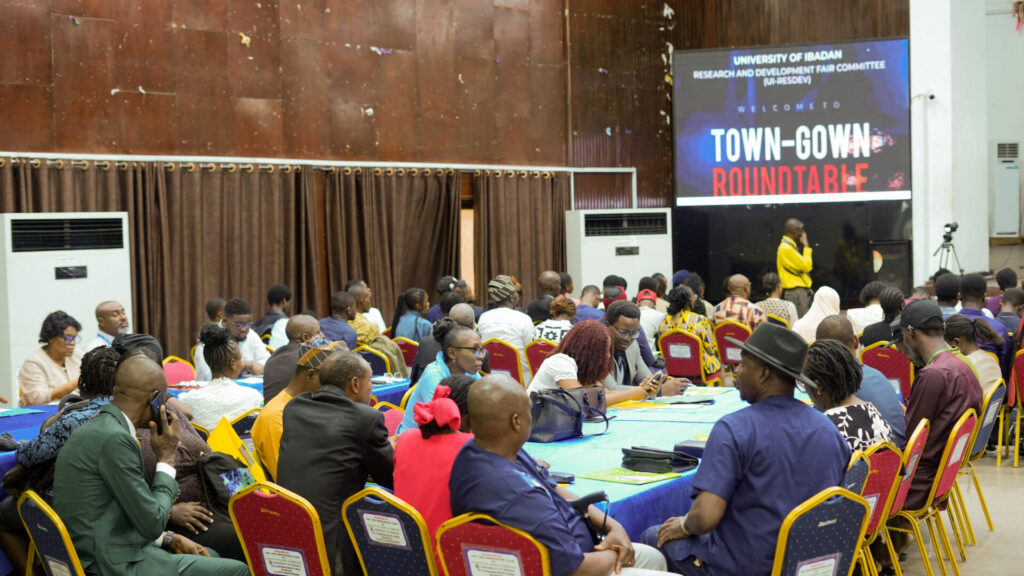
The call was made at the Town-Gown Roundtable held on August 5, 2026, at Trenchard Hall, University of Ibadan, under the theme, “Beyond the Gate: Translating Research into Societal Impact and Commercialisation.” The engagement brought together researchers, government representatives and industry stakeholders to examine barriers limiting the movement of research from universities into society.
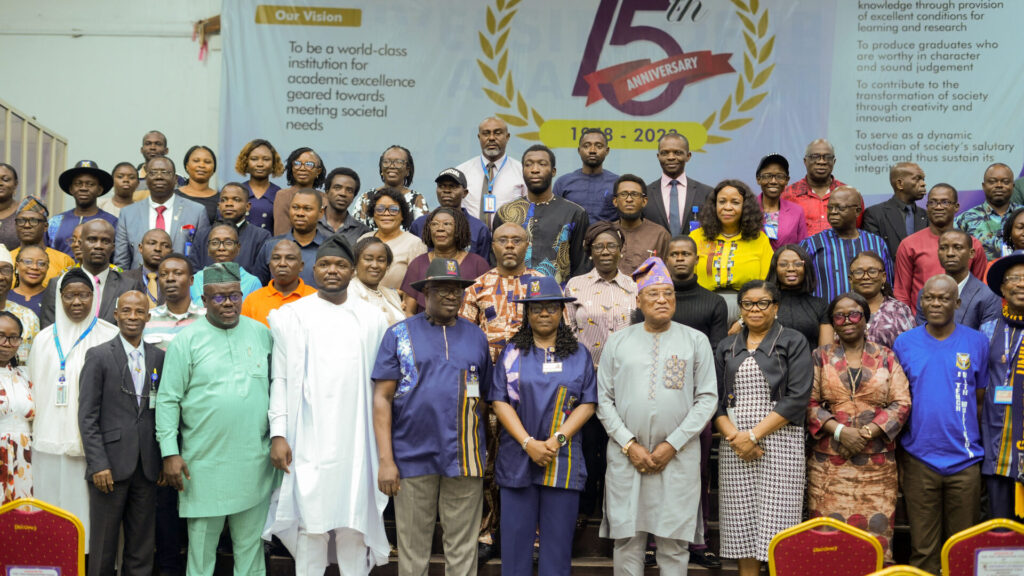
Stakeholders identified weak university-industry linkages, inadequate funding, intellectual property concerns, limited access to data and academic incentives that favour publication over application as major challenges. Proposed solutions included industry-funded research, innovation hubs, product-testing facilities, stronger IP protection, industry-defined research priorities and policies that reward collaboration.
Moving research beyond the gate
In her welcome address, the Deputy Vice-Chancellor, Research, Innovation and Strategic Partnerships (DVC-RISP), University of Ibadan, Professor Simisola O. Akintola, described the University’s gate as a metaphor for the boundary separating knowledge generated within the institution from the society it is meant to serve. She pointed to research that remains shelved, doctoral theses that never leave university libraries, innovations left in laboratories and policy briefs that fail to reach decision-makers. Professor Akintola stressed that the University of Ibadan does not lack research capacity. The challenge, she said, is creating structures that enable research to address real problems and generate value.

She also argued that commercialisation should not be regarded as a betrayal of scholarship, while calling for clearer responsibilities among stakeholders. Industry, she said, should provide capital and market discipline; government should provide public infrastructure; while civil society should articulate real societal needs. She disclosed that the university is reforming its research administration structures to improve the movement of research through Research Management Offices and related support units. Professor Akintola also noted that academic promotion systems still tend to reward publications more than pricing and licensing, arguing that this would need to change as the university strengthens its commercialisation agenda.
DAWN Commission calls for industry investment
The Director-General of DAWN Commission, Dr. Seye Oyeleye, described the roundtable as an important milestone in the University of Ibadan’s research and innovation journey. He highlighted the Town-Gown approach as a departure from the traditional model where universities conduct research largely in isolation and invite industry only after research has been completed. Instead, bringing industry into the process early allows businesses to influence research direction and outcomes while giving researchers a clearer understanding of practical needs.

Dr. Oyeleye commended industry representatives for participating and said the approach could help position the South-West as a leading region for sustainable industrial development. Drawing lessons from the Massachusetts Institute of Technology’s long-standing partnerships with industry, he argued that universities should increasingly treat research as a resource for industry and society. He also referenced the Southwest Zonal National Commercialisation Intelligence and Ecosystem Engagement Workshop, where DAWN Commission participated, describing the region as a trailblazer in research commercialisation.
The DAWN Commission DG urged industry to engage with research already ready for commercialisation as well as research capable of shaping future industry needs. He also called for greater financial investment by industry in university-based research.
Knowledge must solve problems
Representing the Ministry of Education, the Permanent Secretary for Education, Mrs. Maria Olufunke Karunwi, said universities could no longer measure success only by the number of graduates produced or academic papers published. She argued that knowledge must translate into tangible benefits for society and contribute to national development. She also proposed three questions that should guide every research project: What problem does it solve? Who benefits? And can that impact grow? She called for stronger industry partnerships, better-trained talent and government support for infrastructure and storage.

Commercialisation requires more than invention
Delivering the keynote address, Dr. Olusola Sayeed Ayoola, Founder of Robotics and Artificial Intelligence Nigeria (RAIN), said “Beyond the Gate” means engaging with societal needs from the point at which problems are identified, rather than waiting until a solution is ready for deployment. He identified seven ingredients for scaling innovation: creative ideas; technical knowledge and talent; trust in local talent; marketing; supportive regulation; laboratory partnerships; and designing innovations for self-sustaining impact. He also warned against excessive dependence on grants and encouraged innovators to develop sustainable models capable of surviving changes in funding priorities. He stressed that invention is only one part of the process, with commercialisation being the more difficult step.

Dr. Ayoola furthermore, identified access to data as a major barrier to applied research, noting that researchers often struggle to obtain operational data held by companies and government agencies. He proposed exploring a properly governed data exchange platform to facilitate appropriate data-sharing between researchers and industry while addressing security, confidentiality and competitive concerns. On funding, he urged industries to invest directly in university laboratories, research forums and PhD sponsorships, arguing that sustainable partnerships should go beyond one-off donations. He also highlighted intellectual property concerns, noting that both researchers and industry can hesitate to share information because of fears around ownership and protection. The keynote also raised concerns over the loss of Nigerian technical expertise where major projects rely on foreign professionals without adequate knowledge-transfer mechanisms.

Dr. Ayoola called for stronger enforcement of knowledge-transfer requirements and greater involvement of Nigerian universities in projects requiring external expertise.
Manufacturers seek stronger collaboration
Representing the Manufacturers Association of Nigeria (MAN), its Honorary Treasurer, Mr. Aboriomoh Sunday, said Nigeria’s goals of economic diversification, manufacturing growth and job creation could not be achieved without research-driven innovation. He noted that significant research and talent exist in Nigerian universities, but much of the output remains confined to academic publications instead of becoming market products or industrial solutions.

He proposed permanent university-industry innovation hubs, stronger intellectual property protection, increased industry-funded research, student entrepreneurship, government incentives and regional innovation networks. He urged universities to measure success through commercialised innovations and industrial partnerships, while encouraging manufacturers to invest more in indigenous research.
Breakout sessions identify practical pathways
The roundtable’s breakout sessions brought researchers and industry representatives together across Health Sciences, Science and Technology, and Arts and Humanities. Researchers presented ongoing and completed projects, while industry participants assessed their cost, market potential, regulatory requirements and commercial viability. Where research aligned with existing industry challenges, participants began identifying opportunities for follow-up engagement, pilot projects and data-sharing.
The Health Sciences group recommended early cost-benefit analysis, business-oriented research proposals, clearer identification of unique selling points and stronger protection of intellectual property.

The Science and Technology group proposed dedicated facilities where innovations could be tested under real-world conditions. It also recommended that university research portals include industry-defined problems alongside existing research outputs, creating a pipeline of challenges researchers could address.

The Arts and Humanities group emphasised beneficiary participation from the beginning of research design, stronger attention to indigenous knowledge and languages, improved communication of research findings and deliberate implementation planning. It also proposed pairing PhD researchers with industry partners and inviting industry representatives to postgraduate defence sessions, allowing engagement with potential users to begin before research is completed.

From research to impact
The Town-Gown Roundtable reinforced a shared position that Nigeria’s challenge is not a shortage of research capacity, but the limited structures for converting knowledge into practical and economic value. The discussions highlighted the need for researchers to understand market and societal needs, industry to communicate operational challenges, government to provide enabling infrastructure and policy, and universities to create incentives that support collaboration.

For DAWN Commission, the partnership with the University of Ibadan reflects its wider interest in strengthening the South-West’s capacity to generate and deploy knowledge for regional economic transformation. The challenge now is to move beyond dialogue towards concrete partnerships, pilots, investment, policy interventions and products. Ultimately, moving “Beyond the Gate” means ensuring that research does not end with publication, but progresses through innovation, adoption, enterprise, jobs and measurable improvements in society.