Government officials, fiscal policy experts, researchers and civil society organisations have called for stronger citizen participation, transparency and accountability in Nigeria’s public financial management system to ensure that the country’s new Tax Reform Act delivers tangible public value.
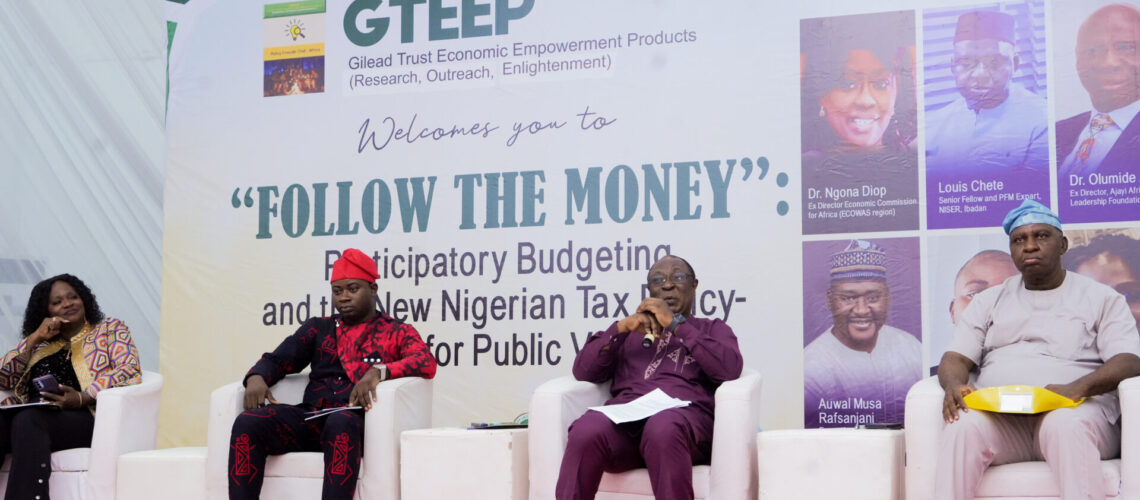
The call was made at the Follow the Money Policy Chat on Participatory Budgeting and the New Nigerian Tax Policy, held on Saturday at Trenchard Hall, University of Ibadan. The event was convened by the Gilead Trust Economic Empowerment Products (GTEEP) in partnership with the DAWN Commission, BudgIT/CISLAC, the Nigerian Institute of Social and Economic Research (NISER), the Nigerian Economic Society (NES), and the Centre for Development and Agro-Industrial Research (CEDAR).
Speakers stressed that tax compliance must be matched by prudent management of public resources, arguing that citizens are more willing to pay taxes when they can see measurable improvements in public services. Discussions focused on participatory budgeting as a critical mechanism for strengthening the social contract between government and citizens, while addressing challenges such as weak budget implementation, low public trust, inadequate transparency, tax evasion and delayed audit processes.

Delivering the welcome address on behalf of the Director-General of DAWN Commission, Dr. Omolara Ejiade underscored the relationship between taxation, accountability and public trust. She observed that citizens are more willing to comply with tax obligations when government demonstrates prudent management of public resources and invests in services that improve livelihoods. She further described participatory budgeting as a vital mechanism for ensuring that public spending reflects the priorities of citizens, particularly vulnerable groups including young people, persons with disabilities, rural dwellers and workers in the informal sector
Representing the Director-General of NISER, Professor Andrew Onwuemele described the theme of the event as timely, noting that Nigeria’s current fiscal reforms require greater attention to how public resources are allocated and utilised. He maintained that while governments often focus on revenue generation, equal emphasis should be placed on ensuring that public expenditure delivers measurable development outcomes and improves citizens’ quality of life.
Setting the tone for the discussions, Professor Bola Akanji, Executive Director of GTEEP and convener of the event, explained that the initiative was conceived to deepen citizens’ understanding of the country’s fiscal system and strengthen the social contract between government and the people. While acknowledging widespread public interest in the newly enacted Tax Reform Act, she argued that the more fundamental issue is whether public funds are translated into visible development outcomes. She encouraged Nigerians to recognise accountability as a civic right rather than viewing government services as acts of benevolence.
The first panel session focused on the role of participatory budgeting in promoting public value and strengthening fiscal governance. Speaking on Nigeria’s public financial management system, Dr. Louis Chete, Senior Fellow at NISER, identified key structural challenges including overdependence on oil revenue, weak tax compliance, delayed audit processes and the persistent disconnect between budget allocations and service delivery. He advocated reforms such as open budget systems, transparent procurement processes, real-time auditing and institutionalised citizen participation throughout the budgeting cycle.
Also contributing, Mr. Joshua Osiyemi, Head of Tracka at BudgIT Foundation, observed that increasing budget sizes have not translated into commensurate improvements in the lives of ordinary Nigerians due to implementation deficits and limited citizen engagement. He emphasised that transparency and active public participation remain indispensable for improving accountability and ensuring that government spending addresses community priorities.
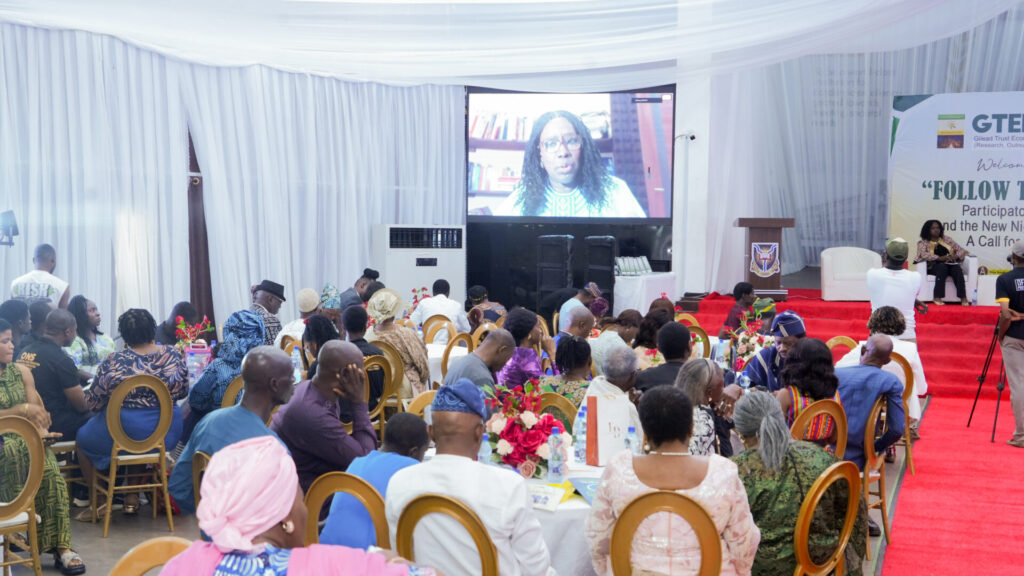
Joining virtually, Dr. Ngona Diop of the United Nations Economic Commission for Africa (ECA) highlighted the growing importance of domestic resource mobilisation in the face of declining Official Development Assistance and increasing debt obligations across the continent. She stressed that participatory budgeting should be regarded not merely as a governance principle but as a strategic tool for sustainable development, urging African governments to fully implement existing regional commitments on citizen participation and accountable governance.
A book review session featured Gender Responsive Budgeting: Lessons from Nigeria and Selected Developing Countries, co-edited by Professors Bola Akanji and Funmi Soetan. Reviewing the publication, Dr. Bukola Daramola explained that gender-responsive budgeting seeks to ensure that fiscal policies address the needs of all segments of society. She identified legal backing, institutional leadership, reliable gender data and sustained civil society engagement as essential conditions for its successful implementation.
The second panel brought together government stakeholders to discuss the implementation of the new Tax Reform Act and its implications for public financial management. Representing the Chairman of the Oyo State Inland Revenue Service, Mr. Saka Adekunle noted that while the reform provides relief for low-income earners, its success ultimately depends on improved tax compliance, particularly among middle- and high-income earners. He called for sustained public enlightenment to enhance voluntary compliance and strengthen confidence in the country’s tax administration.
Participants also raised concerns over recurring project rollovers, underutilisation of released funds and the need to mainstream gender considerations within public budgeting processes. Discussions emphasised that effective budget implementation requires realistic planning, stronger oversight mechanisms and greater inclusion of women and other underrepresented groups in fiscal decision-making.

The forum concluded with a communiqué recommending the institutionalisation of participatory budgeting, open contracting, real-time auditing, accessible budget information systems and stronger community engagement in budget planning and monitoring. Participants further advocated improved tax compliance, enhanced fiscal transparency and deliberate efforts to ensure that public expenditure delivers measurable value to citizens.
Delivering the vote of thanks, Mr. Adesoji Farayibi of the DAWN Commission expressed appreciation to the convening organisations, speakers, development partners and participants for their commitment to advancing evidence-based dialogue on fiscal governance. He described the forum as a significant step towards strengthening accountability, rebuilding public trust and promoting inclusive governance in Nigeria.