
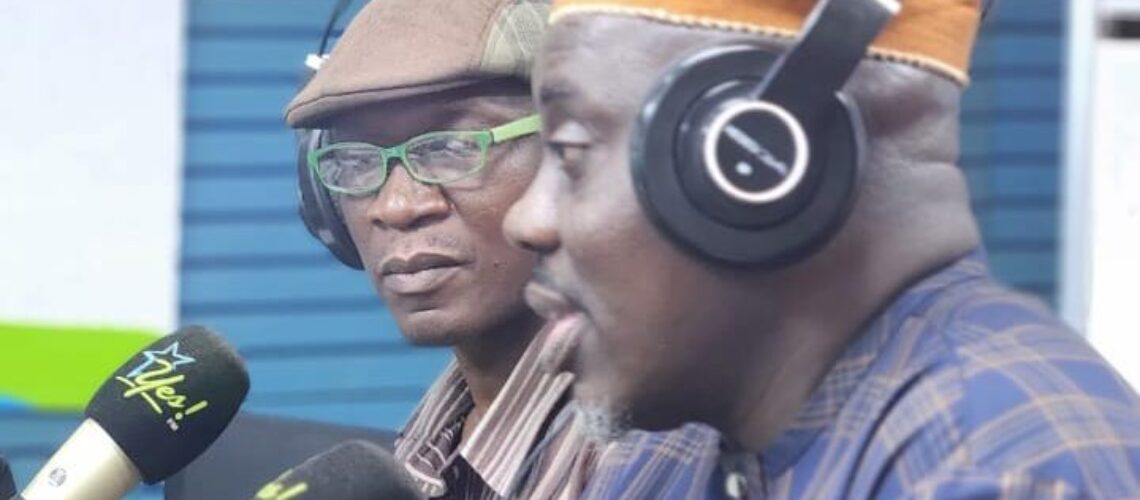
Recently, the Director General, Development Agenda for Western Nigeria, (DAWN) Commission, Dr. Seye Oyeleye granted an interview on YES101.7 FM on POLITICS NOW with SEUN OWOSEENI. Excerpts:
Anchor:
Dr Oyeleye, what exactly would you say is the stance of the Southwest government in the food crisis that we are going through right now? A lot of Nigerians who want to know, especially Southwest people, want to know what our governments are doing to ensure that we leapfrog from this situation.
Dr Seye:
Thank you very much. You’re quite right. Unless one wants to be a liar or you’re living in a cave that you will not know that at the moment the entire country is facing food challenges. Whether you call it a food shortage, whether you call it a hike in food prices, the reality is that we are facing an unprecedented food crisis in the country. Now, if you do a deep dive into the Southwest region, some people have even said that the problem is greater here than in other parts of the country. The food is more expensive here. Well, undoubtedly, let’s start with that.
You might it is more expensive because a lot of the food at the moment comes from our neighbours and our brothers in the north. I would love to correct this fallacy from the onset, that all the food we consume in the Southwest comes from the North. It is a fallacy. It’s just I call that a social media fable. Because a lot of the food that we eat here is produced here in the Southwest. Yes! Farmers will tell you that there are things that we plant here that are transported to the north.
Everybody is facing a food crisis and what are we doing about it? The thing is that this matter- the food crisis, didn’t happen overnight. But one can argue that in the Southwest, we’ve relaxed for too long when it comes to food. We’ve decided to focus on other things because, we realized that, if we do other things, we will have the money to buy our food from anywhere. But increasingly, even in the north, with the banditry and terrorism, a lot of farmers have abandoned the markets and the farms. And if farmers abandon farms, it means that the food they planted or they’re about to plant will not be harvested.
Consequently, the production percentage went down. A farmer who was able to harvest (for example), 1,000 tubers of yam is probably struggling to harvest 200 tubers because he can’t even go to his farm. That immediately affected food prices down here because, just as I mentioned earlier, we do produce part of our food here, but what we’re producing is not enough to feed us. This resulted in a gap, and we knew this was going to happen because experts had been shouting for the better part of three years that, “the way banditry is growing in the north, if it’s not confronted, we’re going to have huge food challenges going forward”. So for some of us who have been involved in this field for quite some years, we knew that today this would come. Because, as I said, if 1,000 farmers are going to the market, to the farms, and because of banditry reduced to 500 farmers, that’s already 50% production lost. The quantity of food coming here will drop. Anyway, what are we then doing about it?
Two weeks ago today, the Southwest governors met in Lagos, and they all agreed that the main issue on the agenda is how to address the food challenges in the region. I remember that I was doing some presentations to them about things like rail and the health blueprint that we’ve developed, and they all said, fantastic, we like that, but people need to eat and it has to be fast. Let’s confront food before we start talking about rail. It shows the level of seriousness that the governors have decided to attach to these challenges. So, what did we do? They mandated my office, the DAWN Commission, to call a meeting of their Agriculture Commissioners, which we did last Wednesday (to demonstrate the seriousness of the issue at hand).
I remember when I was with the governors on Monday, I told them that, okay, we’ll convene the meeting by the end of the month, and they said, no, we need the meeting immediately. I told them, oh, there’s Ileya. They said Ileya is only two days. We need the meeting immediately. So, by the Wednesday after the Ileya Celebrations, all the six Commissioners gathered in Ibadan We brought them down. We brought farmers. We brought experts in other parts of the agri-produce chain. And we agreed on certain steps, on things that can be done in the immediate, that can force down the food prices.
Unfortunately, they’re not going to force down food prices tomorrow, because you can only force down food prices tomorrow if you have things stocked in your silos, as an example. So, what we agreed on is to first combat the biggest challenge confronting farming in the Southwest. That is the issue of land- the accessibility to land, and the clearing of the land.
People don’t know that clearing an acre of land with a tractor costs an excess of 800,000 per acre, not even a hectare. How many farmers can afford that? So the first thing we did was to get the governments, in conjunction with the private sector, to embark on massive land clearing.
If we clear lands, farmers will farm. A cleared land is what a farmer can take to the bank to obtain a loan. If I have 5,000 hectares of uncleared land and I go to the bank for a loan, they won’t listen to me. But if the land is cleared, banks will even come over. So the first thing we agreed on is, okay, let’s embark on massive land clearing. If that is done, we can then get farmers to go back and plant.
Now, it’s not that governments will go and buy tractors. No, that’s in the past. You know, in the past, we saw that governments would go and buy all the tractors. No, there are better models of doing this thing, which has been identified. And some of our states like Ekiti, and Oyo are doing it. They collaborated with the private sector to achieve this feat. So if Mr. Owoseeni has tractors, the government will reach out to you “Hey, we need your tractor for X, Y, Z number of days. You are the one who owns the tractor. You are the one that will service the tractor. Mine, as the government, is to hire.” So it’s not a matter of the government going out to buy tractors, and within a year or so, it runs down.
You know, when it comes to government properties, it’s nobody’s property. So the model is that private sector, and I’m saying it loud and clear now, for anyone that wants to invest in the agri-value chain if you have the funds and you’re buying tractors, be assured that there’s a ready market. Because the government will reach out to you to bring your tractors and your job is to clear land. So that’s just the first step that we’ve agreed that will be done.
The second step that we also agreed on is, in the matter of security itself, we have Amotekun Corps. Now, again, to copy the Ekiti State model, Ekiti State, what they did was they created a unit within the Amotekun Corps. Specifically, they called them Forest Rangers. Their job is to guard the farms and the farmers as well, as also to ensure that cattle do not encroach on farms. So, we said that the model must be replicated in all the other states. So that when you clear land and farmers go to the farms, you can easily also protect what they are planting and they can harvest.
The third thing we also said is that look, we’re going to encourage cluster farming. Cluster farming is very simple. “You have like 1,000 hectares in one location or 500 hectares in two different locations. The government clears land. It’s even cheaper because it’s in one location. You’re not moving the tractors up and down. Then you encourage farmers to go in there and plant. So, if on the 1,000 hectares, you bring in 20 or 30 farmers to plant cassava, you can site a Garri processing store on that farm. You site it there, once the cassava grows, it’s harvested, it’s processed there, and it’s taken to the market from there. By so doing, you’re eliminating middlemen.”
Part of the challenges we face with food prices is middlemen. They hike up the prices because they are the ones that buy and take it to the market. So, if middlemen will go to that cassava grower, you plant the cassava. Once they turn it into dairy, they buy it, they take it to the market. So, to eliminate that, we said as an emergency, each state will provide about 1,000 hectares. That’s 6,000 hectares in the six states. So, what we agreed on was that the state governments would provide seedlings at little or no cost to the farmers. The farmers will now plant cassava, sweet potato, which grows here very well, yams, vegetables and pepper. There are lots of advanced seedlings now, so we’re also engaging our research institutes. So, once they provide the seedlings, the farmers will off-take it, go and plant.
The federal government is doing a lot of schemes now. Again, our states are going to collaborate and ensure that we access our own share of these schemes. One of the challenges we’ve had in the past is that agriculture in this country has been totally skewed in favour of one part of the country, and we tend to think it’s only that part. It’s a mistake, and, of course, it’s because they think that’s where the land is, easy to access. But the population is here. And this technology, which I also have to mention that we also agreed at that meeting that we need to ramp up the use of technology in the way we farm here because, we don’t have the land that is available in the north, but land should not be a total determinant of what you produce.
One of the biggest earners from agriculture in the world is Netherlands. It is a small country but earns billions of euros yearly from agriculture. So not having enough land is not an excuse, and I’m not going to give that as an excuse. We’re going to say that the little we have; we must optimize it. So those are some of the things that we are putting in place. But I can assure you that with effective implementation of some of the measures we agreed on last Wednesday, there’s no way you will not start seeing the results within six months because if you plant maize now, you’re not going to harvest tomorrow. If you plant cassava, it takes about nine months. You’re not going to see the results tomorrow. So, I’m not going to come here and say, oh, no, by next week, food prices will come down. It ain’t going to happen, but we are now going to put things in place. Worst case scenario, June 25, 2025, by the grace of God, we are not singing the same song. It will be a different story. I can assure you that the governors are now more serious than before.
Before the oil boom, we used to feed ourselves. We used to have our rice, cattle and pepper. The beans that we bring from the North or from Burkina Faso now was called Ife Brown. It was developed at Obafemi Awolowo University. How come we now go as far as Burkina Faso to bring that? So, at some point, we lost the edge. But the person who has fallen is defeated when he refuses to stand up. If you fall and you now say you’re standing up, the population here is growing. Nigeria is predicted to add an extra 100 million in 12 years. Look at our population today. They’re saying that in 12 years, we’ll have an extra 100 million. 100 million, they’re not going to live on osmosis. They will need to eat. So, the time to concentrate on agriculture is now.
I read some things online that the government has no business setting up farms. I disagree because that’s not the job of the government. The job of the government is to create an enabling environment. Again, His Excellency Governor Seyi Makinde, as an example, decided to revitalize Fashola Farm Settlement. Fantastic idea.
Bringing in investors to come and farm there. But I must sound this as a note of caution. Some will say, oh, no, we need mechanized big farms. In a country such as ours, subsistence farmers are still the ones that feed the population. But when you incentivize farmers that have two acres, one hectare, or two-hectares all over the place, they are the ones that will feed the population.
If I have 5,000 hectares of cassava, as an example, and I know that I can export it to go and get dollars, I won’t be keen to turn it into dairy for you. But that one-hectare farmer is not going to export. That two-hectare farmer would rather sell here. In India, subsistence farmers are the ones that drive, that feed the Indian population. Look at their population, they’re over 1.5 billion or so, but they feed themselves. Again, part of the policies here is that the subsistence farmers (small-scale, smallholder farmers as we call them) will be incentivized. They will have access to fertilizers and seedlings. Once they have access to that as encouragement, be assured that produce will go back into the markets. Part of the challenges we also have this year with tomato and pepper is that we had a mini drought, and people didn’t know that. In March and April, we didn’t have much rain. There was practically little or no rain. So a lot of the tomatoes and peppers that were planted got burnt.
Now, assuming that we have irrigation, and again, this is where I’m going, we have a lot of dams in the southwest, dams that are not working. Part of the recommendations in the medium term is that we’re going to look at some of the dams that have a lot of land surrounding them. Those are the ones that our governments will target for revitalization in the medium term so that they can then use those dams for irrigation.
Look at Ikere Gorge Dam in Iseyin; that dam alone can irrigate probably half of the southwest region. It was abandoned during the Shagari administration, and up until now, practically nothing has been done. Again, part of our medium-term recommendations is for our governors to go back to the federal government and see how they can take over the Ikere Gorge Dam. Oyo state government has done one or two things there, but we are saying now that maybe there should be concerted efforts between Oyo, Ogun and Osun states and see how they can take over that place to irrigate. So, once we get irrigation right, we no longer have to rely on just rain. If we were not relying on rain, there would not be a pepper shortage now. Yes, we are used to the Hausa tomatoes, but we tend to forget that when there were no Hausa tomatoes, Ours were the tomatoes that filled the gap. But this year, we could not fill the gap because there was no rain.
As I was coming in here now, someone sent me a video of a market in Olode, here in Ibadan, where the quantity of 200 Naira tomatoes has increased in the last few days because gradually our local tomatoes are seeping back into the market. But we should graduate away from having to rely on rain-fed agriculture. Those are some of the things that we have put in place as medium to long-term. It’s not all doom and gloom. It’s challenging now. But as I said earlier, it will be a failure if June 25 next year we are still singing this song. This same song.
Anchor:
These are very beautiful points that you have raised. I’m sure that everyone listening to the show this evening will be— will heave a sigh of relief and say, Okay, so there is light at the end of the tunnel like they always say. As beautiful as all of these are, you made mention of implementation, which is a major challenge. We have in Nigeria, we have beautiful policies, and we have things that we want to do, but now bringing this to reality has always been a problem. So is there a mechanism that you have put in place, in the DAWN Commission, to ensure that the meetings you had last week come to reality because that’s what will make it beautiful? Is there a follow-up?
Dr Seye:
Yeah, you see, it’s as if you peeped into the memos that we sent to the Governors today, finally, with the communique, and we said specifically, that the DAWN Commission will serve as the monitoring and evaluation body, that we will follow up on all these things, and thankfully, the governors have agreed to support us in this, to do more. So, we shall be doing that, to ensure that all the things we’ve put on paper are implemented.

Anchor:
These are very insightful points you have raised. I’m sure everyone listening this evening will feel relieved and see the light at the end of the tunnel. However, implementation has always been a major challenge in Nigeria. We have beautiful policies, but making them a reality is often problematic. Has the DAWN Commission implemented any mechanism to ensure the plans from last week’s meeting are implemented?
Dr. Seye:
Yes, indeed. In the memos sent to the governors today, we specified that the DAWN Commission will serve as the monitoring and evaluation body, ensuring all plans are implemented. The governors have agreed to support us in this endeavour. At our last meeting at Cocoa House, some commissioners brought experts from their ministries, such as the Oyo State Commissioner for Agriculture, who came with the Chief Extension Officer for Oyo State. Extension officers are crucial in ensuring that policies are properly implemented and supervised.
Our states now understand the issues and have set targets. The Commissioners for Agriculture are also under pressure to deliver results. We are excited about the contributions from the commissioners at the meeting. The Southwest region is in safe hands, but our governments must ramp up funding for agriculture. We can’t rely solely on the federal government.
Agricultural operations in Nigeria have been skewed towards a particular region due to their engagement strategy. We are now developing a strategy for the Southwest to engage in Abuja for better funding. However, we will also implement actions that do not require federal intervention.
Once we can feed ourselves, we can consider feeding other parts of the country. The Southwest has the weather and land to grow various crops. Strategic approaches to agriculture are being implemented now. While prices won’t drop immediately, planting now will yield results in six to twelve months.
The seriousness being demonstrated by the states is evident. The Yoruba saying “ti ounje ba ti kuro ninu ise, ise buse” highlights the importance of food, which is at the top of the agenda for all states. Today, the Southwest governors are meeting in Abeokuta, likely discussing food and prices, which drive inflation in Nigeria. Encouraging home gardening is also important. For example, a friend of mine in Ibadan planted 400 yam tubers in cement bags and expects to harvest 300. If 20 homes did this, it would yield 6,000 tubers of yam, making a significant impact. We must not rely solely on the government.
Anchor:
Based on the food shortage, Ibadan was once the food basket supporting Lagos state. How will the DAWN Commission ensure there is no breakdown in this project? How holistic will the preparations be to synergize with the governors and reduce inflation significantly?
Dr. Seye:
You mentioned political will, which I believe every governor has because feeding their people is crucial. The challenge is funding and effective allocation. At our recent meeting, we had agricultural technology experts provide accurate data on necessary actions and funding targets, replicating successful models from places like Niger State.
The six states are now working in sync, aiming to promote interstate agricultural trade. We need adequate data to optimize farming schedules, predict weather changes, and manage irrigation efficiently. The private sector will fund these initiatives, while the governors will create an enabling environment. An example is developing ranches for cows, which will eliminate the need for herding and protect farms from encroachment. Modernizing agriculture includes leveraging technology for better planning and execution.
The DAWN Commission will monitor and ensure proper implementation. We have capable staff dedicated to this mission, declaring a state of emergency in agriculture within our office to focus our efforts. Training for agricultural extension officers will ensure they can effectively oversee projects and provide necessary support.
This approach will not yield immediate results, but in six to twelve months, we should start seeing positive changes. Smallholder farmers are crucial as they feed the local population, and incentivizing them will boost the local food supply. With strategic planning and execution, the DAWN Commission aims to significantly reduce food prices and inflation within the southwest region.